Read for work so just adding for the record.
Category: memoir
MOTHERHOOD by Deborah Orr
I spent this entire memoir waiting for the other shoe to drop. It’s written with the strong implication that the author has been profoundly traumatized by her childhood, so I kept waiting for the trauma to happen. There are many times when she tells us she doesn’t want us to think too harshly of her parents, and indeed she succeeded, because as far as I can tell they were pretty good.
Here is a comment from her mother, that she regards as scarring:
“When I was having you, Deborah, your dad said to me, ‘As far as I am concerned, the chicken comes before the egg.’ Wasn’t that a lovely thing to say?”
I really don’t see it. What husband wouldn’t prioritize his wife over a fetus?
She finds out her parents don’t have much sex. This is not any of her business, in my view. But it in her view: “It’s the shocking secret at the heart of my existence.”
I can only say: ?
Perhaps the problem is this is my second memoir of a de-industrializing Scotland in the seventies in under a month, and the first was the magically good SHUGGIE BAIN. They are really not in the same league. Let me give you a sample of some insight from this one:
People. We are so tough and so fragile, both at once, we humans
OKAY. I don’t want to be mean. But it really wasn’t my favourite.
FAMILY LIFE by Akhil Sharma
You wouldn’t think there was any more space left in the world for another novel of the American immigrant experience. Apparently there is, and here it is.
FAMILY LIFE is about a boy who moves from India to the US with his family as a child.
The charm of the novel is Sharma’s creation of a child’s eye view of the world, direct, assured, sometimes kind of racist. Here’s two pieces on his father:
I used to think my father had been assigned to us by the government. This was because he appeared to serve no purpose.
And:
While my mother was interested in status, being better educated than others or being considered more proper, my father was just interested in being rich . . . Because of my grandfather’s problems, my father had grown up feeling that no matter what he did, people would look down on him. As a result, he cared less about convincing people of his merits and more about just owning things.
The family are on the path of hard work and immigrant grit when his SPOILER ALERT older brother is in an accident that leaves him brain damaged. Things get much harder from there. Side point, I love this:
Weeks passed. The weather got colder. The days tipped backward into darkness. Some evenings our house and street appeared dark while the sky was light. In October the trees shed their leaves, and our houses stood undefended on its lawn.
He works hard in high school, has a girlfriend, goes on to university, and becomes a miserable investment banker (is there another kind?). I liked this thought on his girlfriend:
Minkashi lives in Texas now. She is an accountant. This surprises me because you always expect people who matter a great deal to you to end up leading glamorous lives
A really good book. I shall look for his other novel.
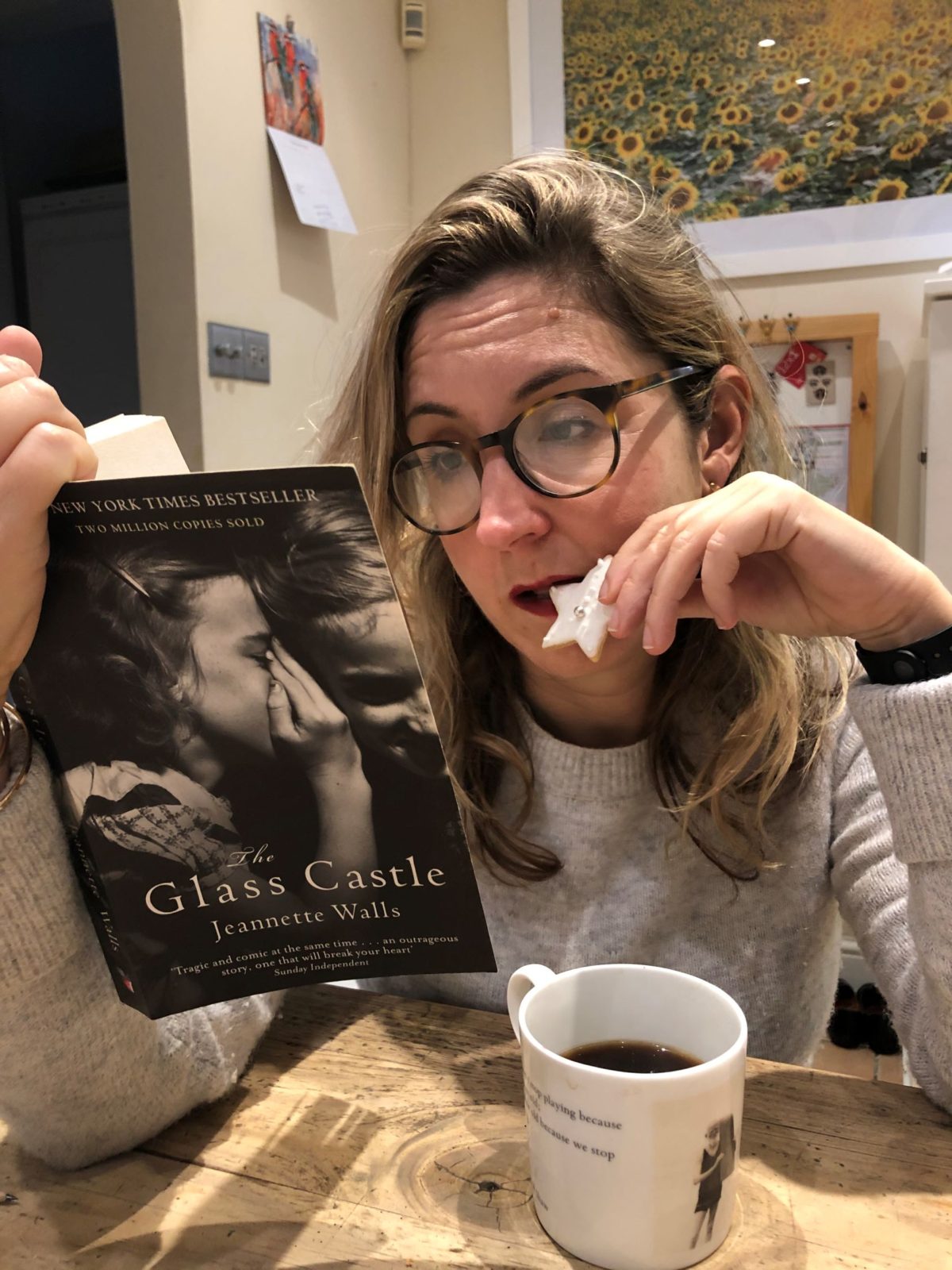
THE GLASS CASTLE by Jeannette Walls
In this memoir, a wealthy gossip columnist lives on Park Avenue while her parents live on the streets. Bizarrely, your sympathies are 100% with the gossip columnist.
There are many memoirs of rough childhoods. Usually, this comes from some clear cut cause, as for example addiction, mental illness, etc. Here, it seems to come from an over-abundance of romance and self-indulgence.
The dad kind of has a semi-excuse, being an alcoholic. But first, weren’t most peoples’ dads alcoholics in the 1970s? I’m not really sure that that cuts it. And second, he declines the most basic of help (e.g.,food stamps) even when he is sober. And this is when these small kids have not had anything other than popcorn to eat in three days.
The mum meanwhile is a whole other story. She refuses to work, despite being a trained teacher, for the strong reason that she does not want to. She wants to paint, write novels, and eat chocolate. When they do get her to briefly work, she complains every morning: “I’m a grown woman now. Why can’t I do what I want to do?”
I mean I can’t say I don’t see where she is coming from. Less attractive is when she tells her daughter, who has been groped, that sexual assault is a “crime of perception,” and even less attractive is when she hides a family size Hershey bar from her very hungry children so she can eat it herself.
The parents are well educated, and so early on, while they are still young and maybe classifiable as ‘alternative,’ they do provide the children with lots of excitement and interesting experiences. Over time though, without money, ‘alternative’ becomes ‘gross.’ Their children escape them to go live in New York, where they mostly thrive. The parents follow, and weirdly decide to be homeless, despite the offer of help from their (remarkably forgiving) kids and – strange twist – the revelation that the mother owns very valuable land in Texas, and has done for their entire, impoverished lives.
The book has a highly suspicious amount of detail about the author’s life before the age of ten. I googled it when I was done, fully expecting lots of libel suits, but apparently her family agrees that this is indeed, really bizarrely, how this all went down. I finished the whole thing in a night, something I haven’t done in a while.
LIT by Mary Karr

Mary Karr is apparently a famous memoirist. I am meeting her however only in this, her third book, so I have missed the Texas childhood with alcoholic parents, and the highly sexed adolescence, and am just tuning in for the descent into alcoholism.
It’s probably an indictment of my upbringing that I didn’t find this descent especially harrowing. Indeed, I barely found it alcoholism. For god’s sake, she doesn’t drink in the mornings! She doesn’t even get the shakes! However, this probably says more about Zimbabwean society than it does about the memoir. The important point is that she feels she is an alcoholic, and commits herself to AA and sobriety most commendably.
Her descent goes in parallel with the birth of her baby and the attendant collapse of her marriage. She desperately desires as baby, and – as seems to be the way with these things – is desperately unhappy once said baby arrives.
She writes with great honesty, and often a real comic sense, about this period:
The time I’m mostly thinking of, you were barely four, which – I would argue – is less like being a miniature person than like a dog or cat who can talk.
Her child is in fact a central character in this memoir. The lady has spent a lot of time in therapy, and thus there is a great deal about her parents’ failings, and how they explain everything about her life. I tried not to find this irritating. As a parent herself, she has, it seems to me, a vastly overinflated idea of how much impact she is having on her own child. At one point, she enrolls herself in therapy, because she snaps at her child – once! – in a grocery store parking lot. At other times, she seems to promote entirely bratty behaviour as charming self-expression:
As a toddler, once faced with a tea service at my in-laws’, he’d stuck his fist in the sugar bowl and upended it, sugar spraying all over as Mrs Whitbread hissed that no other child in that house had ever interfered with a tea.
While I struggled with some of Karr’s ideas, such as her understanding of your parents as the centre of your personality, I still very much enjoyed this book. It was bracingly, often painfully, honest. It is not often you get to hear someone’s in-depth analysis of their own failings, vanities, and embarrassing hangups; and I found her struggles with them, often unsuccessful, to be oddly inspirational.
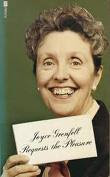
JOYCE GRENFELL REQUESTS THE PLEASURE by Joyce Grenfell

I am now reduced to reading celebrity memoir. And worse yet, a celebrity I have never even heard of: Joyce Grenfell. She was, it appears, famous in the 1950s as a monolguist. I can only say: monologuist?
Regular readers will understand from this that my Kindle has not yet arrived in Harare. I am thus reduced to reading whatever I can find on my parents’ bookshelves. This wouldn’t necessarily be a problem for someone else, as my parents own a lot of books, but unfortunately as my parents’child I have had an entire lifetime to read them. Thus, there is not much left. Thus, Joyce Grenfell.
In a move of striking originality, Grenfell begins her autobiography with her birth, which took place in a very nice part of London. Everything thereafter also seems to happen in a very nice part of London, unless it is happening in a very nice part of New York, or of Vancouver. Grenfell is born into a very wealthy family, and one of the more interesting aspects of this uninteresting book is an insight into the life of someone who does not ever need to work for a living. Her life appears to be a round of nannies and tea parties and dances. Family friends include theatre luminaries such as Noel Coward and Ivor Novello. Call me a cynic, but I’m going to go ahead and suggest that her success in show business may not have been down 100% to sheer talent and drive.
Here’s a taster, a comment on her father’s military service: “Like many men, he did not enjoy his time in the first world war.” Profound! And indicative of the book as a whole. Indeed, what I found most striking about this book was how very little Grenfell managed to share about her life, while writing a book about her life.
Even poor writers, when writing about themselves, usually manage to provide some insights; but this book is a miracle of emptiness. I wish I could give you some summary of her later life, and even reveal what after all a monologuist is, but I never got past adolescence, having to give up on Joyce Grenfell after the first hundred pages.
EAST OF EDEN by John Steinbeck

I seem to be reading nothing but memoir at the moment, so I thought that this epic novel would be a interesting change.
Oh dear, never mind that, this turns out to be a kind of memoir too, but of the large scale, mythic and messed-up kind. Steinbeck wrote it as a history for his small sons, and was convinced it was his masterpiece.
It’s pretty long and painful overall, but there are some great parts: a wonderful evil prostitute murderer character; ideas about early home freezing; some quite shocking violence; and an interesting conception of America: ”In the old lands they say of us that we go from barbarism to decadence without an intervening culture.”
On one level, it’s a retelling of the biblical story of Cain and Abel; on another it’s a story of the Salinas Valley in California where Steinbeck grew up; and on another it’s a history of his family. Basically, the book tells of two neighbouring families, across two generations, where two sets of brothers battle for their father’s affections. Steinbeck clearly feels we are a bit dim, and in case these repetitions weren’t enough, makes sure to tell us, frequently and explicitly, about his theory that the ur-story of us all is our endless struggle for our parents’ love.
Clearly, this guy had a lot of issues with his siblings.
Personally, I think he should have gone to the therapist, rather than the publisher, but what the hell, he’s Nobel Prize winner John Steinbeck and I’m some girl in Nairobi who’s still in her pyjamas at 2pm.
GOODBYE TO ALL THAT by Robert Graves

Graves wrote this memoir when he was just a year older than me, 34, going through an ugly divorce, and on the point of leaving England forever. It is an awesome exercise in wholesale bridge burning.
It makes me feel like writing my memoirs, except that fortunately for me I have not had quite such an event filled life as Graves, who was in that unlucky generation that left high school in 1914, and so swapped one uniform for another, entering the First World War as teenagers.
We begin with his childhood, which is largely spent in one of these famously damaging English public schools, and he seems to have been accordingly damaged. He is bullied relentlessly (honest to god, where are the ADULTS in these places? When I was teaching I regarded one of my main jobs as keeping a beady eye on the big ones – anyway), until he takes up boxing. He has some success with this, and that seems to help keep the worst kids off him. He’s also astonishingly frank, for a book written in 1934, about falling in love with a younger boy, Dick.
On graduation, he volunteers for the army and is sent to France. The first dead person he sees there is a soldier who has killed himself rather than carry on, and things go downhill from there. Graves writes a very straightforward account, including detailed accounts of the bungling by high command. At one point he is declared dead, and his mum gets the condolence telegram, but with all the rude health of nineteen he pulls through.
On one of his leaves he marries a young woman and when the war ends they live in Oxford together. You might think, from the prosaic way he writes, that he was not as damaged by the war as some; but then he calmly tells you all about how he keeps seeing dead people piled up on the streets, and how these daymares are with him constantly until at least 1928.
He has four children by his wife, who is an early feminist, and when they lose all their money in a failed business venture, very laudably pitches in with this mountain of childcare for many years. Even more laudably, given that this book is written during a bitter divorce, he refrains from bashing on the feminist wife too much.
A grimly honest account of an interesting thirty four years.
THE LAST RESORT by Douglas Rogers

This book tells the story of the author’s parents’ attempts to hold on to their land during the decade of Zimbabwe’s collapse from about 2000 on. The perspective is surprisingly honest: Douglas Rogers couldn’t wait to shake the dust of Africa from his feet, and can’t understand why his parents would fight to stay.
Rogers grew up on various farms in eastern Zimbabwe, and once he left school fled this rural idyll as fast as he could. On retirement, his parents bought a rocky piece of land and decided to run a backpackers lodge, which did well initially, until the economy, and thus the tourism industry, began to crumble.
That Rogers worked as a journalist for many years is abundantly clear from this book. The style is simple and unaffected, and the plot moves quickly enough to keep the attention of any commuter. This is almost to a fault; the book is sort of forgettable, though the story is not.
After the backpackers left, the prostitutes started arriving, then a small dagga business (that’s pot to the non-African readers), then the dispossessed farmers (both black and white), then the illegal diamond dealers, then, most dangerously, the MDC activists in hiding during the dark days of 2008 (that’s during the bloody elections, non-Zimbabwean readers). Meanwhile the possibility of their land being seized was constantly in the air; at one point they found out that their property deed had been cancelled, and ‘vested in the president,’ without their even being informed.
It’s a very intimate portrait of his parents, and of their struggle to maintain not just their lives (it gets very dodgy at the end), and their land, but their definition of themselves as Zimbabwean. In the final chapters, when the father is taking considerable risks protecting the MDC members, there’s a very sweet section about how, for the first time in his life, and for the first time in the history of his family in Africa (an impressive 350 years) he is at last on the right side of history.
This books sounds quite tragic, but is largely written in the comic vein, which is I think very Zimbabwean. It also a story more of victory, than of defeat. I hope that’s very Zim too, though possibly not.
Here’s a rather sweet interview with the author.
BILLY BROWN I’LL TELL YOUR MOTHER by Bill Brown

This is an autobiographical tale of growing up in the years immediately after the second World War.
Some aspects of it are quite interesting: the aspirational nature of council housing (that really bends the mind, today); the sense of community; the fun to be had in bombed out houses. It’s also an engaging and pleasant read, and you find yourself caring for the characters, and believing in their world.
In general however I have to confess I found it a tiny bit cheesy. Apparently, immediately after the war, no one ever had any complex or contradictory feelings, and no arguments were ever serious.
I suspect that it is perhaps read and loved by people who remember that time, and in particular perhaps by those who like to tut tut about today.