
My relentless hunt for something to read led me to the New York Times list of the best thrillers of this century. This was described as ‘literary’ which seemed a bit strong, though I don’t deny the artistry. It was tightly plotted and clever and the resolution was unexpected. But, if you’re going to read genre, I just don’t know why you would read thrillers. It’s such a sad world. I’d much prefer romance, where you know nothing is going to go really wrong and people will end up happier than they began. This one was particularly bleak, being about the death of a child. I don’t know why this would be relaxing? But many people find it so, so let me not judge.
BIG MAGIC by Elizabeth Gilbert
People like to make fun of Elizabeth Gilbert, because of EAT PRAY LOVE, and I can’t tell you why, but I feel like there is something misogynistic about that. In any case, here is her book on living a creative life. I enjoyed it. Try this:
“Sometimes I think the difference between a tormented creative life and a tranquil creative life is nothing more than than difference between the word awful and the word interesting. Interesting outcomes, after all, are just awful outcomes with the volume of drama turned way down.”
What an interesting thought, that we don’t have to create a rod for our own back. She is big on how unhealthy the tortured artist mindset is. She points out how strange it is that we have turns of phrase like ‘I’ve broken the back’ of a project. As if suffering gives us legitimacy. I think it’s a good point; why do we think joy can’t do that? I liked this:
“You can resist the seductions of grandiosity, blame, and shame. . . You can measure your worth by your dedication to your path, not by your successes or failures.”
“The seduction . . . of shame” is a great turn of phrase. The more I write, the more I think I really liked this. Let’s not bother with my ‘thoughts.’ Let’s just quote extensively:
“It seems to me that the less I fight my fear, the less it fights back. .. In fact, I cordially invite fear to come along with me everywhere I go.”
And
“Laziness and perfectionism are the worst. You want to learn to become a really disciplined half -ass”
And
“If you want to be an artist of any sort, it seemed to me, then handling your frustration is a fundamental aspect of the work. Frustration is not an interruption of your process, frustration is the process.”
BLACK BAG by Luke Kennard
I loved this book so much I can hardly function. I keep recommending it to people who have not asked for recommendations. Usually the Booker prize actively avoids actually good novels, but somehow this one has got on to the shortlist. I haven not read the others but CLEARLY THIS DESERVES TO WIN.
It tells all about a struggling actor who gets hired to attend university classes in a large black bag, as part of a sociology experiment. Over time he comes to love being black bag. Why? I can’t tell you, it’s a profoundly great book in which black bag can mean many things. As with all books I love, let’s just quote extensively. Here we are on his caring for his elderly parents:
“I would like to be able to look after you, but I can’t because I have stubbornly committed myself to an art and vocation with no future and precious little present., rather than training as an accountant or a stockbroker or maybe a lawyer. And out of what? Sheer perversity of spirit, encouragement at an impressionable moment (the nineties), and, by this point, sunk-cost fallacy.
Isn’t it time someone rescued me from the cult of myself for deprogramming?
To trust in the arts is an act of hubris so self-destructive the gods don’t even bother to punish you for it.”
On a swan shaped pedalo: “It’s face, like any swan’s face, real or plastic, resembles that of a man who doesn’t really want to be at the masquerade ball.” Who can ever look at swans the same way again?!
On a rainy afternoon: “The kind of rain that only happens on a Tuesday, heavy like preordained rain, rain augured and written by prophets aeons ago This will be a wet place.”
On entering an audition: “The usual plunging feeling that every human being is real, substantial and well-defined except for me. I dismiss this. Inverted vanity. Get over it. Well, hello, I must be myself, they’re grateful to me for coming in, my experience is impressive, just relax, they’re going to do something a bit different.”
On his friend: “Claudio and I get on well because we have known each other since the age of seven, which is to say thirty years, and we have, at some base level, no respect for one another: we do not fall for one another’s hasty renovations of character or revisionist sophistications; we are not convinced by one another’s adult selves.”
General lols:
“I pick up the collected poems of Frank O’Hara. I have a television. Sometimes I like to tell people that, in the way other people like to tell people they don’t have a television.”
And
“I worry that I smell of stale cofee but perhaps this isn’t something to worry baout in academia.”
And
“Within black bag I am wearing only a pair of maroon boxer shorts which – I don’t know why – have the words DARE TO WEAR written on the elastic in capital letters. This is the twenty-first century. Get on board or your pants will.”.
And then this lovely thought, not even by Kennard but quoted by him from the Pensees by Pascal: “A trifle upsets us because a trifle consoles us.”
HAPPENS EVERY DAY by Isabel Gillies
Here’s a memoir by some poor woman who moves to Ohio for her husband’s work and three months later gets dumped by him for a much younger colleague. It reminds me of the Belle Burden’s STRANGERS, another memoir about how very possible it is to know almost nothing about your own husband.
Most interesting thing about this book is how extraordinarily old fashioned the writer is. The divorce happens in 2005, but it reads like its 1955. It is just wild. Try this:
“Because I was on the cover of Seventeen magazine when I was fourteen and I am an actress, I depend on the fact that, objectively, I am good-looking. Tall, blond hair . . But I can tend to depend too much on the idea that I am pretty and sometimes, I don’t try very hard.”
She spends a really astonishing amount of time on home decor, and really cares a great deal about her husband’s height. And again:
“It seems clear to me now that although Josiah loved us and wanted dearly to have a ncie family, there was something in him that just did not want to let him do it.”
‘Nice family’?!? What is that?!? Who says that kind of thing?
I’ve got to report she also comes from money. She seems to think it is pretty normal that she spends her summers in Maine, with the ‘other women’ all of whom apparently don’t have jobs. She grew up in an apartment overlooking Central Park. She acts like moving to Ohio is an insane trek into the wilderness.
I don’t know why I sound like I’m slamming her so much. I enjoyed the honesty of this book. It was refreshing. And it was encouraging to see how she recovered. One wonders how she did not see the red flag that he left his first wife while she was pregnant. He left her with two toddlers; maybe with this third wife he’ll make it till the next kids are in elementary school.
BELOVED SON FELIX by Felix Platter (ed. Stephen Greenblatt)
Get ready for the real-life diaries of a teenage boy in the 16th century. It’s everything you can imagine, especially if what you imagine involves a lot of public torture. The diaries begin with his journeying to Montpellier to study. Coming into Nantua, they see bodies hanging from trees. “The night came upon us as we descended the mountain,” he writes, “and it became so dark that we only just missed bumping into a corpse that was hanging from a branch.” A few days later, coming into Lyon: “we saw several men hanging from gibbbets and others exposed on wheels.” And then at Nimes, they passed an execution ground. “Pieces of human flesh hung from the olive trees, and the sight gave me a curious sensation.”
It’s sometimes quite Adrian Mole, except if Adiran Mole dined with Nostradamus (which this guy did!). Lots of classic teenage stuff: they find “an infallible recipe for making the hair grow,” and smear it on their chins every day. They then razor their bare chins every day and astoundingly, this does not work. It’s also touchingly honest – about how frightened he is of the dark, about the pressure from his dad about his studies, even about his medical issues – e.g., 29 May 1553: “I purged myself with pilulas coccias, which sent me to stool sixteen times and left me very weak. My master was sent for and was very alarmed.”
I am also now annoyingly bursting with info about the 16th century, so I would avoid dinner parties with me for a while. That they had flocks of peacocks from the Indies, that they burnt huge bushels of rosemary to keep warm, that the apprentice program was basically a swap of sons between houses, and etc.
But mostly what I take from these diaries is the life of an ordinary sixteen year old boy. How unique and not unique everybody’s little experience is. It feels weird to think he’s dead, and has been for four hundred years.
MY BRILLIANT CAREER by Miles Franklin

Here is a book written by a teenage girl in rural Australia in 1899. Considered an Australian classic, I was well into it at first. Try the beginning:
“MY DEAR FELLOW AUSTRALIANS – Just a few lines to tell you that this story is all about myself – for no other purpose do I write it. I make no apologies for being egotistical. In this particular I attempt an improvement on other autobiographies.”
And shortly after that:
“You can dive into this story head first as it were. Do not fear encountering such trash as descriptions of beautiful sunsets and whisperings of wind. We (999 out of every 1000) can see nought in sunsets save as signs and tokens whether we may expect rain on the morrow . . “
The brilliant career is something of a joke. She wants to be a famous writer, but her family is poor and rural and she ends up having to work as a housemaid. The sequel is called MY CAREER GOES BUNG, which I thought sounded amazing. I won’t get to it though, because I confess I kind of quit this one part way through. It kind of read like an over excited teenager, which is I guess what she was, but for some reason I just didn’t have the tolerance. Feel a bit bad about it, because what a teenage girl she was!
WHAT A TIME TO BE ALIVE by Jenny Mustard
I’ve really got to stop impulse purchasing GenZ novels. I cannot now exactly recall what this one was about, as I finished it right before I went on holiday. I have a vague idea it was basically : girl finds first year of university hard, bends over backwards to get boy to like her, is embarrassed by her actual friends, etc, I mean I guess as I write it’s a universal story? It was set in Sweden (or Norway?) so everyone was disgustingly well fed and well adjusted about sex. So maybe not all that universal
STAINLESS by Todd Grimson
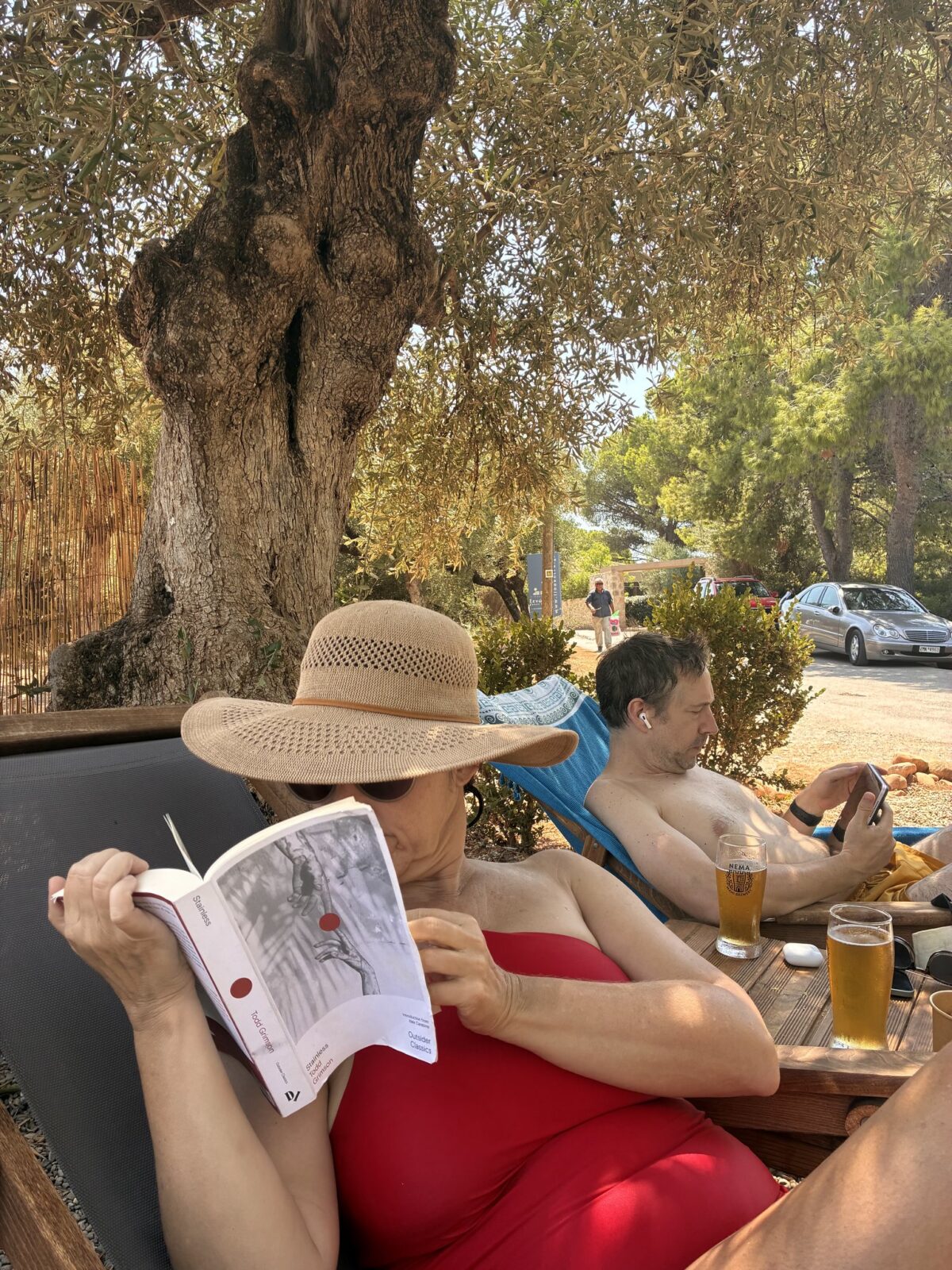
I just love the plug for this novel:
“Justine is a vampire. Keith just lives like one. An ex-junkie and ex-rock star, his hands mangled by his dead ex’s own jealous ex, he’s let go of his ambitions. It’s true that Justine has been around for a few centuries and Keith barely three decades, but they’re good for each other: Justine is teaching Keith to take the long view; Keith is reminding her how it feels to be alive. Yet a cohort of criminals, desperate artists, dead-enders, hangers-on, and wanna-bes, undead and otherwise, threaten their curious union. Can love stay untainted in a world of monsters?”
LOL. It was kind of cool and creepy, being a novel of the underbelly of LA in the 80s, which even by the standards of underbellys is pretty seamy. It did start to get a little same-y, another teenage junkie murdered, etc. And for a while I was enjoying the central relationship, until eventually had to give up when we had a lot of emphasis about how the vampire lady was just so insatiable for his penis. That crossed into oh dear.
THE DRY by Jane Harper
I found this in the NY Times list of the best thrillers of the last century. I was in a bit of a reading drought, so I thought I’d give it a go. I don’t usually read thrillers but I clearly needed a page turner. And it was pretty good. The pages turned as we investigated a murder-suicide that turned out to be a murder-murder.
I am still not so into thrillers. I did enjoy the setting, being a small Australian town during a drought. This being the warmest summer in the UK since 1976, it felt appropriate.
SUNSET SONG by Lewis Grassic Gibbon
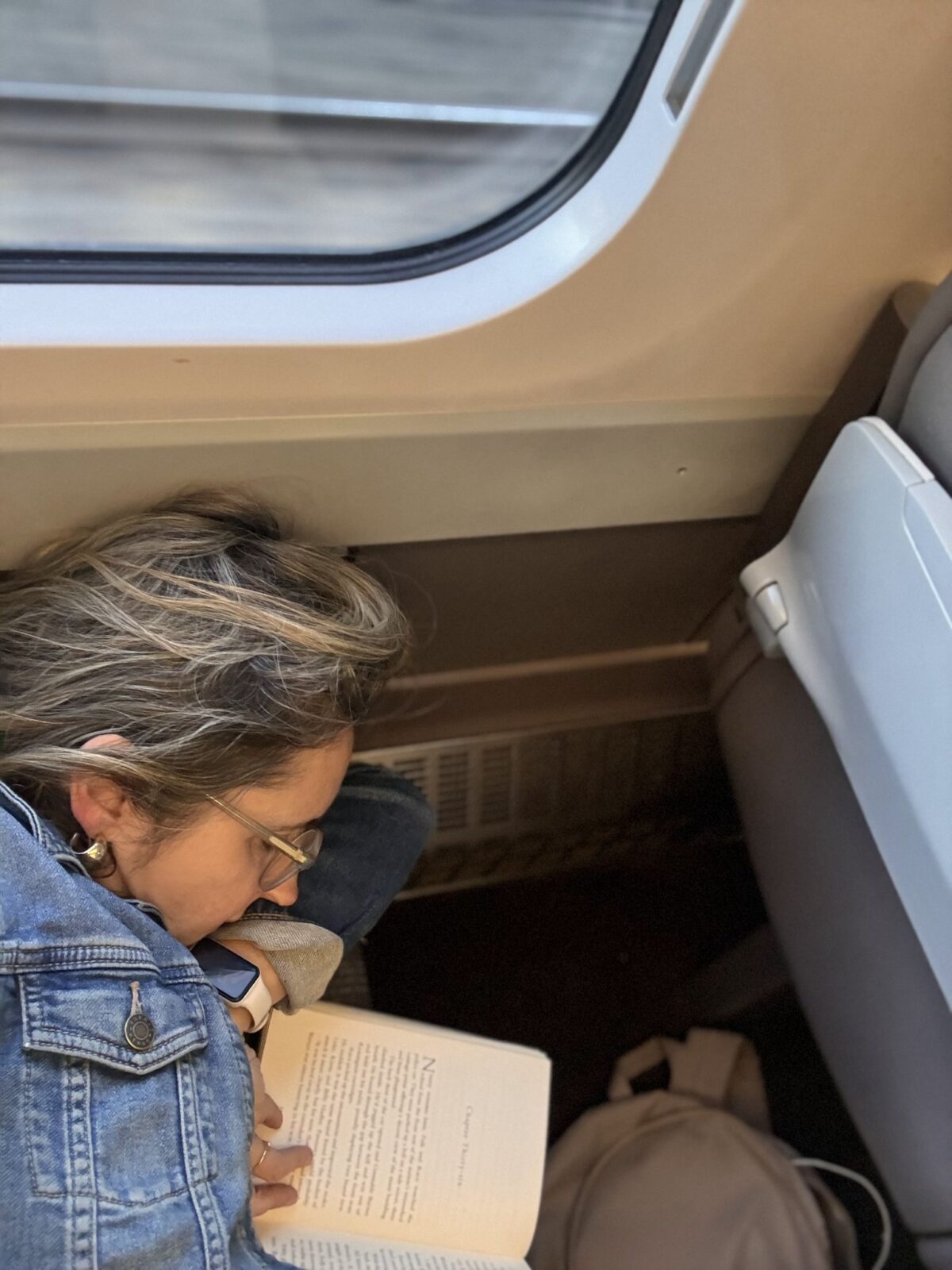
This is often called Scotland’s favourite book, and I get it. Published in 1932, it is fiction, but based so heavily on the author’s childhood in rural Scotland that his neighbours complained about it on publication. Like most books about childhood, and particularly rural childhoods, it is very much an elegy. It absolutely aches with a love of the Scottish countryside. It’s also very funny, capturing a wide range of local characters, often not in the most flattering way (thus the complaints)
It mostly tells the story of the coming to adulthood of a young woman called Chris Guthrie. One plot line that really surprised me, given the period, was her mother’s death. They had already four kids when she got pregnant with twins, and after they were born she told her husband she didn’t want any more children. He told her she would be thanking god for whatever ‘she was given.’ She later killed herself and the toddler twins, apparently because she found out she was pregnant again. Poor lady, she just couldn’t face it. And all this just because this guy didn’t want to pull out. Apparently the entire neighbourhood did go ahead and blame the husband, for ‘breeding his lie like a sow.’ This all seems very modern to me now, and apparently it did to people then too, as it caused quite a scandal. I can only say, thank god for birth control and divorce.
One point of interest is that the book is fairly difficult to read, because the author was trying to capture the ‘Scotch language’ in English form (so a ‘braw’ hat becomes a ‘brave’ hat). The glossary is forbidding. But I enjoyed it all the same.