NAPLES ’44 by Norman Lewis

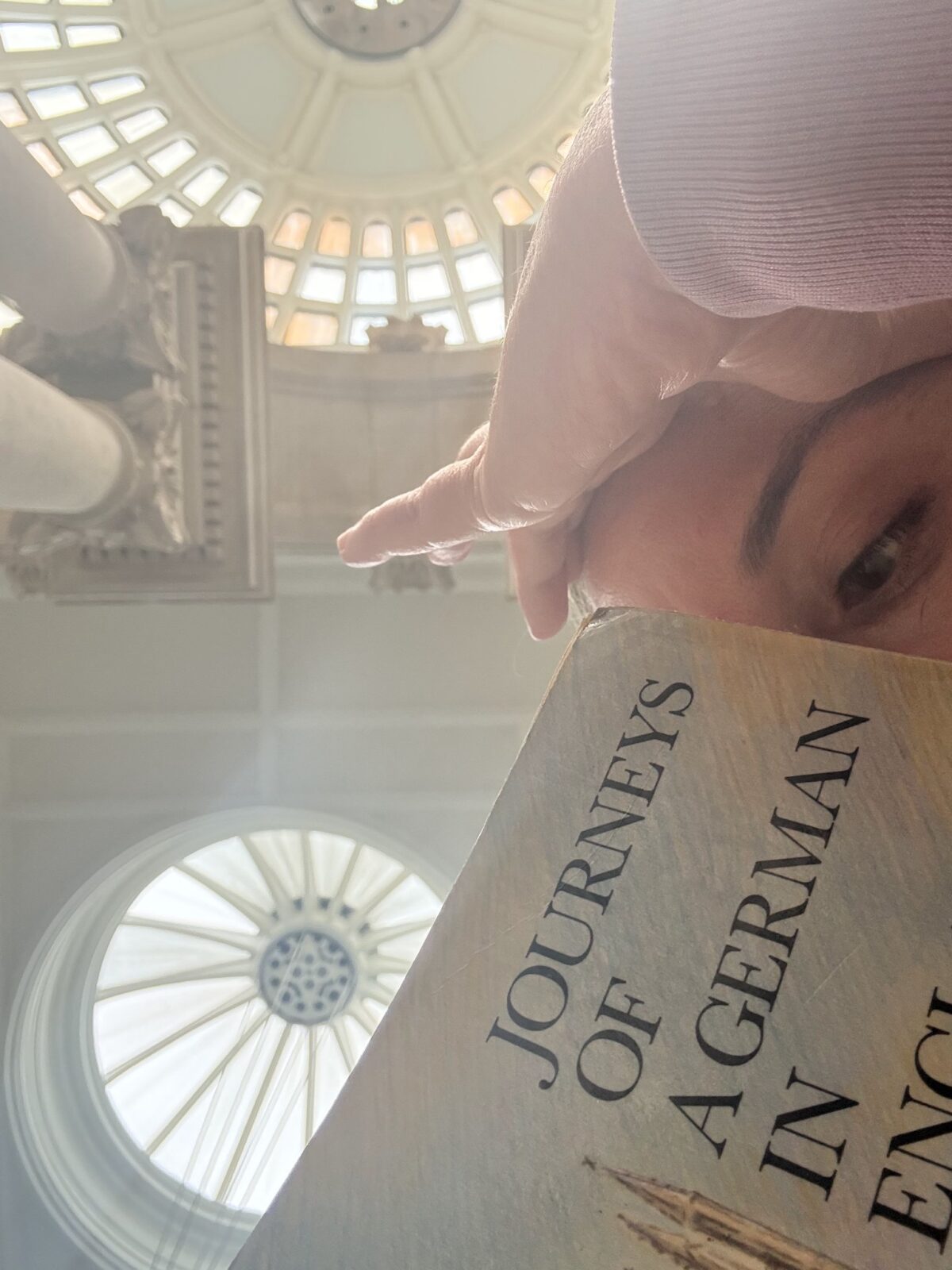
I feel like I spend half my time trying to dig up ideas of books to read. Someone gifted me a subscription to the London Review of Books, and it’s proving a goldmine of obscure ideas. This one is non-fiction, a journal of a British intelligence officer in Naples in 1944.

It’s a fascinating look at what it was like for civilians on the losing side. Guys, it was bad. Really bad. No one has anything to eat, to the point that a huge proportion of the female population is having to do sex work. It’s grim.

I don’t know who this author is, but the writing is banging. One small example – he casually describes a minor character has having “a face the colour of a newly unwrapped mummy.” Lol!

THE HEART’S INVISIBLE FURIES by John Byrne

This book is in the grand tradition of books that try to do a life end-to-end. It was engaging and I enjoyed it, skipping through 700+ pages in no time. But somehow it has not stayed with me hardly at all. God, writing is crazy. Readers are so difficult! If I was this author I would be like: WTF! WHAT DO YOU WANT WOMAN?!? And to be fair I guess I don’t know.

One thing I did take from this book was that Ireland was rough in the 1950s. This seems to be a trend of this year, because I got the same message loud and clear from LOVE AND SUMMER by William Trevor, from SMALL THINGS LIKE THIS by Claire Keegan, and etc. Ireland 1950s needs to up its PR budget

BORED GAY WEREWOLF by Tony Santorella

This book had a fun premise, in which a twenty-something slacker who is incidentally a werewolf gets sucked into a dodgy self-help movement. But then it went a bit sideways, and kind of trite, complete with fight scenes and ‘found family.’ I am not sure where I wanted this book to go, but it was not that way. But it was fun in any case.

THE MOUNTAIN AND THE SEA by Ray Nayler

I gave up on this book, but I still enjoyed it. The 300 pages I did read were jam-packed with ideas. Basically it asks the horrifying question on what would happen if octopuses acquired our level of intelligence. This I consider a really big concern. Because let’s say dolphins did, or parrots, they don’t have opposable digits, so basically nbd. But octopi have four times our number of opposable digits! Its set in the far future, and is one of the few really believable far futures I’ve ever read. There’s a slave ship for scraping the last protein from the ocean, which has slaves on it because they are cheaper than robots, there’s a cyborg whose feelings are hurt because academics can’t agree if he is conscious or not, there’s customized hologram boyfriends, and that’s before the octopi get super intelligent.

There’s also a cool part about how our brain floats around in total dark, and our whole sense of the world comes from electrical impulses sent to it in its black chamber. I love this image.

LOVE AND SUMMER by William Trevor

I liked another book by this author, FELICIA’S JOURNEY. It was all about a poor Irish girl trapped by her society. It didn’t like this one nearly as much. It was also about a poor Irish girl trapped by her society. It started to make me feel like this guy just likes torturing poor Irish girls. This one was particularly grim. It’s about a girl brought up in a Catholic orphanage who goes out to be a maid and marries her employer and then SPOILER ALERT falls in love with a young man. From page 1 you just know that this isn’t going to be a story about finding happiness or escape. You just know everything’s going to turn out bad. And I just don’t have the tolerance for it. It’s almost like gratuitously miserable.

THE POWER OF NOW by Eckhart Tolle

This is the second time I have started this book, and the second time I have not finished it. Weirdly, both times I have got something out of it. It is a quite famous self-help book, and I think is the basis for some somewhat culty organizations. I don’t hold this against it, indeed I would query how good your self-help book is if no one can get a good cult out of it.

In the Introduction, Tolle tells us how he was suicidal one night, and thought he just couldn’t stand himself anymore. Then he wondered who was this ‘he’ who was experiencing himself. He had a sort of major insight, where he was able to see that his thoughts and feelings were not his inherent self. He then went to sleep, and woke up in such a state of bliss that he spent the next three months on park benches.

It sounds kind of crazy, but the point is very much the basic point of mindfulness – that we don’t have to identify ourselves with our thoughts. He goes on to build out this idea at some length, and I particularly liked some of his ideas – that you really, really, don’t need to think about your past. That it’s largely irrelevant. Also that you can decide not to create more pain for yourself. That you don’t have to accept anything as a ‘problem.’

He then gets a bit loopy, one-ness, Spirit, etc, and that’s where he keeps losing me, though one of these days I will get through it.

THE SAILOR WHO FELL FROM GRACE WITH THE SEA by Yukio Mishima

Here is a book for boys, and especially the sort of boys who are interested in Japan. It starts off strong, with a 13 year old boy figuring out how to watch his mother undressing in her bedroom. She gets a sailor for boyfriend, so soon he is seeing more than this, and in particular the sailor’s ‘temple tower.’ (?!?)

The boy is in a creepy gang, and they SPOILER ALERT murder a kitten. I cannot tell you too much about this part because I skipped it. The boyfriend becomes a step-dad, and when he catches the boy peeping, does not beat him but has a healthy conversation with him about it. The boy is horrified, thinking this is unmanly, and so his creepy gang plans to SPOLIER ALERT murder the sailor.

Why?! What was the point of this?!? I am not sure. However, I enjoyed this description of a ship’s horn: “a cry of boundless, dark, demanding grief; pitch-black and glabrous as a whale’s back and burdened with all the passions of the tides, the memory of voyages beyond counting, the joys, the humiliations: the sea was screaming. “

THE PLACES IN BETWEEN by Rory Stewart

In this unhinged memoir, Rory Stewart decides it is a good idea to walk across Afghanistan by himself. In 2002! In winter!

He has already been walking for many months by the time he gets to Afghanistan, and is constantly being told by warlords about how dangeorus the route is he has chosen, as it is across the mountains in the snow. You would think you would listen when TALIBAN WARLORDS are telling you something is dangerous. He does not. We learn a lot of things in this memoir, but not the answer to the most important question: why?

I did find it interesting when he said about how frequently locals sit in silence, especially if nothing interesting has happened of late, because as he notes they have all known each other since childhood, and none of them has read or seen anything interesting (because they can’t read and don’t have TVs). He is often with locals, because his plan for accommodation and food is to ask locals for them. I appreciate that due to the emphasis on hospitality in Islamic culture this is not such a very weird plan, but I personally would have been uncomfortable. The people he is walking among are very poor, and I don’t know if the fact that poor people are willing to give you their food means you should take it.

Also of interest is the fact that he is following in the footsteps of Babur, the 15th century founder of the Mongol empire, and he often refers to his memoir. It started to feel familiar to me, and then I realized this is because I have read it. It is, btw, one of the first memoirs even written. And I was like: DAMN, I am well read. Though I only remember the killing parts, to be honest.

OH THE GLORY OF IT ALL by Sean Wiley

In this memoir we see what happens when selfish people get divorced. The book is by the son, who was nine when his parents split up. His father was immensely wealthy, and did a good job of making sure his mother (third wife) got very little. She responded with high drama, asking Sean (the son) to DOUBLE SUICIDE WITH HER, and then GUILITING HIM when he didn’t. You would think his weeks with his father could only be better than this, but the new wife, the step-mother, is Snow White levels of bad. As a small example, at the dinner table, she has herself, the dad, and her kids sit at one end, and then leaves some chairs before Sean’s chair on his own. There are much more, and much harsher rules for him, and she tells Sean a lot about how his father doesn’t love him.

Predictably, Sean explodes as an adolescent. He is clearly a loving person, and this book is as much about the friends who get him through it, as the parents who are the ‘it’. The book in my view was a little long – we could have lost 100 pages without trouble – but I still enjoyed it, and admired the author rising above his childhood so magnificently.

DREAMSTATE by Eric Puchner

In this novel a woman scraps her wedding after falling in love with the best man.  JUICY!  Interestingly though, this exciting premise only takes up the first maybe 20% of the book.  Then we follow the main characters – the ex-groom, the wife, the best man, through what turn out to be long and interconnected lives.  It’s pretty sad at the end. This is not because they lead sad lives.  It’s full of all the stuff lives are full of, children, jobs, crises, etc.  It’s not even sad because at the end they are old, and deal with the stuff that comes if you are lucky enough to get old, dementia, cancer, etc.  It’s more just a feeling of: so that was that.  All that drama, changing husbands, breaking hearts, and you all end up at the same place in the end.  

I really loved some of the descriptions.  We’ve got a child “seven years old and preposterously beautiful, like a child in a French movie;’ we’ve got chimpanzees “lounging around their enclosure like Romans after an orgy;” or this, on Haloween:  “Occasionally someone executed a costume so perfectly that it made you wonder whether you’d undersold what life had to offer. ” 

Or this, from when the bride first meets the best man, Garrett: 

“He had one of those pitiable mold-length beards, less a fashion choice than a flag of surrender.    . . . Charlie had said Garrett was having a bit of a hard time – what that meant exactly, Cece wasn’t sure, except that in guy-talk ‘a bit of a hard time’ generally meant something much worse.  It meant depression or addiction of both.”  

LOL.  Well done this author.  This must have taken some serious work.