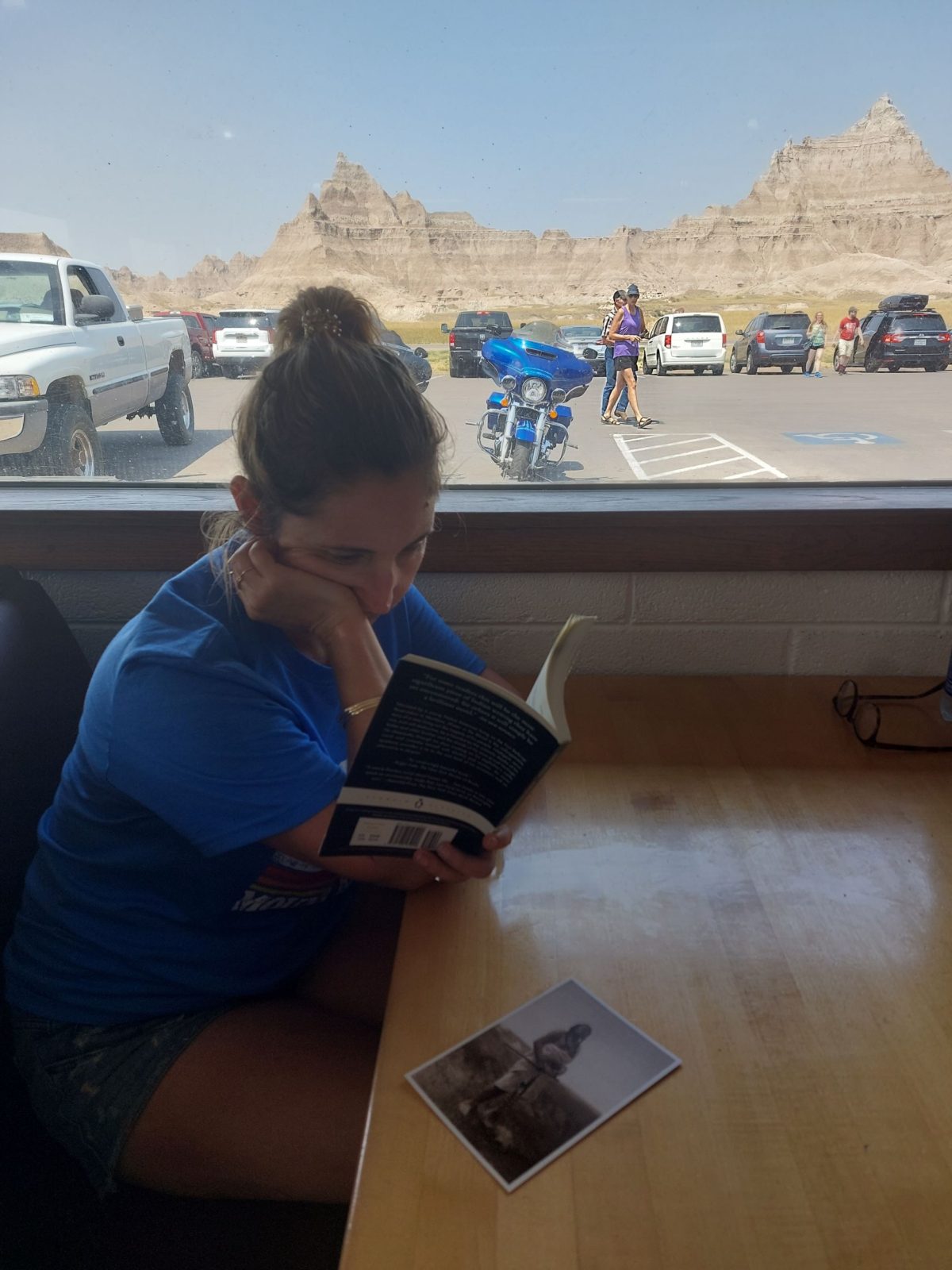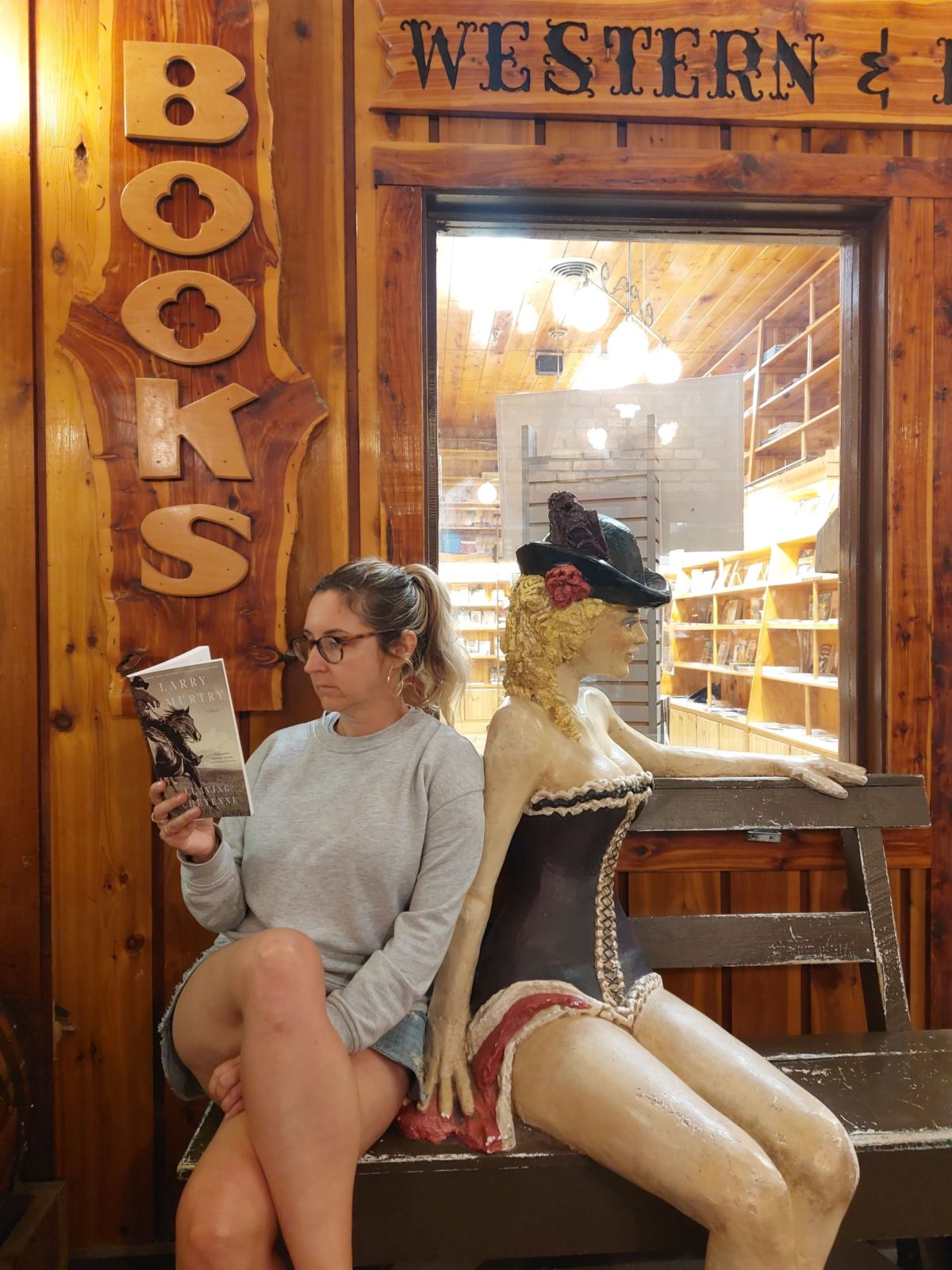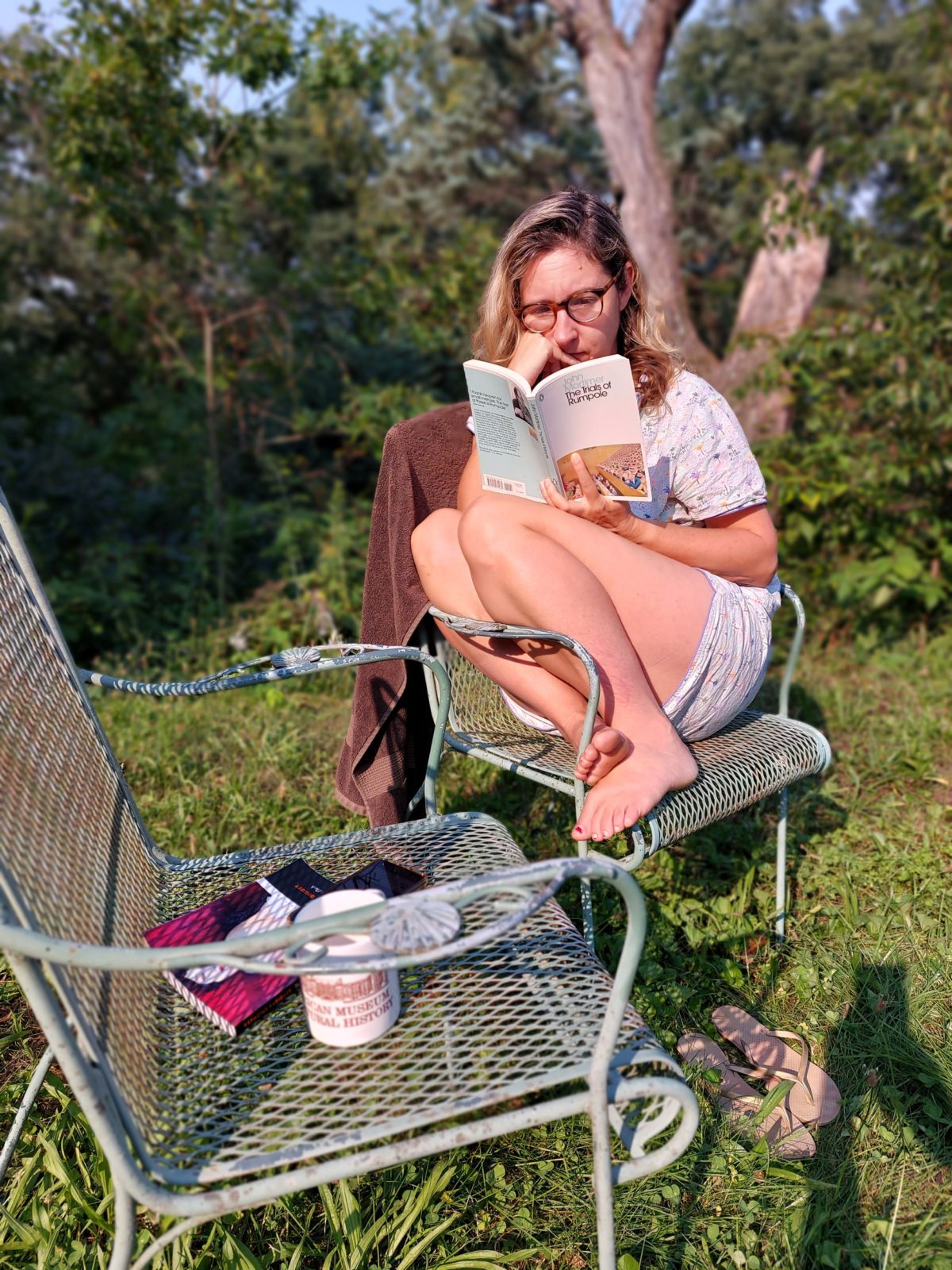
SEVERANCE by Ling Ma

Here is an unusual and enjoyable apocalypse.  People are infected by a fungus that slowly removes their higher functions, so that eventually they are only able to go through the routines of their life, repeating familiar loops, till they die of exhaustion/starvation.  It’s weirdly poetic, with – for example – a single Gap store remaining pristine, because one of ‘the fevered’ is stuck in a routine there, endlessly folding and refolding. 

The protagonist, Candace, is just getting dumped by her boyfriend as the book begins.  He wants to be an artist, and doesn’t want to have to have a ‘job.’  Candace also wants to be an artist, and also doesn’t want to have a job, but is more on the realistic suck-it-up end of the spectrum.  The infection comes out of China (this book is really eerily Covid-y), and she agrees to stay as the skeleton staff in her office in New York, enjoying the familiarity of her routines as the city empties. 

Eventually she escapes the city and falls in with a group of survivors, the leader of whom very quickly loses his sense of proportion.  One of the members of their group visits her childhood home and almost immediately gets stuck in a loop.  Apparently familiarity is a trigger:

The past is a black hole, cut into the present day like a wound, and if you come too close, you can get sucked in.

Don’t need a pandemic to learn that. 

So a mysterious and interesting book, albeit with some unnecessary and exceedingly woke sidebars about capitalism and immigration.  This concept of your routine as both comforting and deadly I keep thinking about.  As she says towards the end:

To live in a city is to live the life that it was built for, to adapt to its schedule and rhythms, to move within the transit layout made for you during the morning and evening rush, winding through the crowds of fellow commuters. To live in a city is to consume its offerings. To eat at its restaurants. To drink at its bars. To shop at its stores. To pay its sales taxes. To give a dollar to its homeless.
To live in a city is to take part in and to propagate its impossible systems. To wake up. To go to work in the morning. It is also to take pleasure in those systems because, otherwise, who could repeat the same routines, year in, year out?

I feel there is something important about this, but I can’t quite figure out what it is

MY YEAR OF REST AND RELAXATION by Ottessa Moshfegh

In this book, the general principle that you will feel better after a nap is here taken to its extreme.  A young woman is tired and miserable, so she decides to go to sleep.  For a year.  She does this by finding an irresponsible psychiatrist and medicating herself in dangerous ways.

This lady is a major hater, and much of the enjoyment of this book is seeing how she goes about her hating.  Let me make one extensive quotation to give you a flavour:

 “Dudes” reading Nietzsche on the subway, reading Proust, reading David Foster Wallace, jotting down their brilliant thoughts into a black Moleskine pocket notebook. Beer bellies and skinny legs, zip-up hoodies, navy blue peacoats or army green parkas, New Balance sneakers, knit hats, canvas tote bags, small hands, hairy knuckles, maybe a deer head tattooed across a flabby bicep . . . They would come into Ducat, the gallery I ended up working at, with their younger—usually Asian—girlfriends. “An Asian girlfriend means the guy has a small dick,” Reva once said. I’d hear them talk shit about the art. They lamented the success of others. They thought that they wanted to be adored, to be influential, celebrated for their genius, that they deserved to be worshipped. But they could barely look at themselves in the mirror. They were all on Klonopin, was my guess. 

Truly it was hilarious.  There is lots of hating like this.  I haven’t read pure joyful rage like this since LUCKY JIM (side bar, I bet there aren’t too many reviewers connecting those two books). 

Of course the obvious question about this book is about the rent, and how she paid it.  Answer, rich parents.  You got to swallow that one down to enjoy the book, and it’s a tough one.  But there you go: rich people even get to have better misery than poor people.

This aside, I enjoyed MY YEAR OF REST AND RELAXATION, though fair warning, it does not resolve.  At the end of the year, in the last few pages, she wakes up, suddenly feels better, and then, for no reason, 9/11 happens. I mean, I nearly laughed.  Never mind, endings are hard. 

LEAVE THE WORLD BEHIND by Rumaan Alam

Everyone knows it’s much easier to write the set-up of a sci-fi novel than it is to satisfyingly resolve it, so in this book the author des not even bother to try.  Surprisingly, it works.

A family of four head to a rural Airbnb outside New York.  They go grocery shopping and we learn a bit too much about their sex lives.  Then in the middle of the night an older couple knock on their door.  It is the owners of the Airbnb, who have fled New York because ‘something’ has happened.

SPOILER ALERT: you never find out what the something is, and it doesn’t matter.  Things get very creepy.  For one thing, the deer start to mass into huge herds.  For another, there is an incredibly loud noise.  And then some flamingos arrive and the childrens’ teeth start falling out. 

I wish LEAVE THE WORLD BEHIND had been longer. I wanted to know where it was going, because while it did mounting terror very well, it was strange for it to end, as it did for me, mid-mount. 

I also struggled slightly with how literary it was.  I love the author’s twitter feed (you should follow @rumaan) which is hilarious and contemporary and unfussy.  The novel had a bit too much philosophizing for me, basil chopping, and etc. 

And yet I would indeed feel very proud if I had written it.  Strongly recommend.  Makes you feel COVID’s not that bad. 

EVERYTHING I KNOW ABOUT LOVE by Dolly Alderton

Here is a book to make you really feel like an immigrant.  You live in London for a majority of your adult life, you think you fit in, then you read a book by an actual Londoner and you realize you’re still and always a visitor. 

It’s not so much the extremely specific London references she makes, but the confidence with which she makes them: as if she is sure that many people share the same experience as she does. I can only ever aspire to feel that way.  (That said, I did laugh at those references I did understand. When her friend gets married she fears she will end up having to go out with the husband’s “friends and their wives at barbeques in bloody Balham.”  But this is not funny to you if you don’t know London, which is my point)

The book is a series of essays about various relationships that the author had in her twenties.  As befits any even half-feminist writer, these are not all romantic.  Despite the book’s title, they are not even mostly romantic.  Much of the book is about the various female friends she lived with in houseshares across North (of course) London. 

I always find something creepily hetero-normative about people who only have friends of their own gender.  But I still found this part of the book quite touching.  It reflects what is true, is that unfortunately Prince Charming may come late, and even when he does, he can only do what he can do.

She has an intense and lengthy online relationship with a man, who she meets for one remarkable late night date, and then never hears from again.  She is upset, but as she puts it: .. like a child mourning the loss of an invisble friend. None of it was real. . . We played intensity chicken with each other, sluts for overblown, artificial sentiment and a desperate need to feel something deep in the dark, damp basement of ourselves

This I thought was interesting, as was this:

To be an empirically attractive young man, you just have to have a nice smile, an average body type (give or take a stone) a bit of hair and be wearing an all-right jumper. To be a desirable woman – the sky’s the limit. Have every surface of your body waxed. Have manicures every week. Wear heels every day. Look like a Victoria’s Secret Angel even though you work in an office. It’s not enough to be an average-sized woman with a bit of hair and an all-right jumper.

I don’t think this is true anymore.  These days, younger men face just the same body fascism as women do, and possibly more I think.  They have to find a way to fit in those skinny jeans. I feel sorry for them but also like hahahahahahhaa welcome.

THE TOPEKA SCHOOL by Ben Lerner

Here is a book that confirms abundantly my suspicions about books with long sections in italics. Authors seem to feel like as long as it is in italics it is going to be okay for it to be sort of rambling and non-rational. There is only so much of this kind of thing I can take.

These italics parts are reserved for a developmentally disabled teenage boy who is being treated cruelly by the cool kids. The main character is one of these cool kids. Or maybe not that cool, because he is a debate star, and debate is not cool. On the other hand the whole thing takes place in Kansas, so who knows, the bar may be lower there.

In any case, THE TOPEKA SCHOOL is very much a boys’ book, packed full of boys’ issues. It was rapturously reviewed, so maybe I am missing something, but I just couldn’t get into it. Apparently the fact that in high school debate you are rewarded for building arguments you don’t believe in is problematic and speaks to larger issues in America. Or similar. I don’t know.

AUGUSTUS by John Williams

John Williams wrote the novel STONER, a novel that this blog tells me I read in 2013. So profoundly wonderful is this book that the author’s biography is called THE MAN WHO WROTE THE PERFECT NOVEL. You will note that it does not refer to perfect novel(s) and this is because AUGUSTUS is unfortunately not a perfect novel.

Don’t get me wrong, it is much better than what most people could achieve on their very best day after a lifetime of trying, but still in comparison to STONER it can only be meh.

It is a deeply researched account of the life of Augustus Caesar, told through the letters of his contemporaries. Apparently ancient Romans were great letter writers – Cicero wrote eight to ten a day (did he not have a job?) – and so this is not as unlikely a device as it at first seems.

It is an interesting story, but for my taste a little bit too much sandals and togas and boys impressing each other. But perhaps it’s just that it’s not STONER. Sadly nothing can be STONER.

Sometimes one regrets seeing how high the bar can go, because it makes one realize how low it is usually set.

THE ROOMMATE by Rosie Dannan

I bought this as a beach read because the New York Times called it a great beach read.

I rarely read straight up romances, but this was indeed ideal vacation reading. It tells the story of an uptight wealthy young woman who moves to LA to chase a man who she has had a crush on since high school. He ends up having to go on tour, so she has to live with his roommate, who turns out to be a . . . porn star.

So this is the romance, and it was fun. Though also very interesting it learn about the economics of the porn industry. They have some very serious labour rights issues. I can’t believe I am such a dork that I walk away from some beach reading with concern about civil rights in pornography.

THE GREENGAGE SUMMER by Rumer Godden

Here is a novel about getting your period.  It also involves some jewelry theft and desecration of the Glorious Dead.  

It’s 1923 and a single mother of five children gets so tired of their sass that she decides to take them to a First World War battlefield so they will be shamed into good behavior. Once in France she is bitten by a horse fly and nearly dies because before antibiotics everything was apparently serious. She spends the summer in hospital while her children run unsupervised around an elderly hotel that smells of “warm dust and cool plaster… Gaston the chef’s cooking, furniture polish, damp linen, and always a little of drains.”  The hotel makes a business of the battlefields. They re-bury a soldier’s skull in the garden for the dogs to dig up before each group of tourists arrive, and make sure the machine gun holes are never painted over. Good behavior from the children does not markedly improve. 

Instead they spend the summer exploring their budding sexuality (older children) and the greengage orchard (younger children).  The oldest girl has a romance with someone who turns out to be a murderer and a diamond thief, which sounds about right for the judgement calls you make when you are 16. Our narrator, her 13 year old sister, is very jealous, through the thief kindly helps her getting her the female sanitary products she needs.  

This also sounds wildly unbelievable as I write it, but was in fact based on the author’s own experience.  What I really enjoyed about the book in fact was not so much the lurid plot, as the great charm of her vivid recollection of her siblings and the French countryside. It was somehow very sweetly melancholy as a bottled memory of a time and a place, that is now slipping out of human memory.  Only the very oldest people still recall that summer of 1923, and it was touching to hear about it as we approach 2023.

THE NONESUCH by Georgette Heyer

In this novel a wealthy man falls in love with the governess.  Based on the novels, I’ve read, apparently this used to happen all the time in the old days.  I don’t know what these governesses had going on but it was REAL effective.

Of course the other option is that this is all wish fulfilment, and that in the past, just as today, people typically ended up with someone who was in the same income, same age, and same level of attractiveness.  Also, and this is very important, same level of willingness to settle and decide they can’t do any better. 

Definitely I prefer the wish fulfilment. 

LEOPARD IS A NEUTRAL by Erica Davies

Randomly, books have started arriving at my house for someone who lived her years ago. They seem to be complimentary copies, I don’t know why. I’m enjoying the weird serendipity of unchosen books. I rolled my eyes at this book about style, written by a stylist, but then it occurred to me that just possibly a stylist knows something about style that I could learn from.

She did have some good suggestions. One is, throw away things that you hope will fit one day or that you will wear one day. If you keep too much clothing for the better person you will one day be, it’s hard not to feel bad about the person you are every time you open the closet. She also suggested that rather than think about minimizing your bad bits, you should think about how to accentuating your good bits.

What I found most interesting about this book though was the imagined reader. This lady I guess got big on Instagram, so she has a clear idea of who her audience is, being women just returning to work after having small children. It really made it seem bleak. She kept saying things like: ‘you may have no idea who you are,’ or ‘you feel terrible about yourself,’ as if this was a widely understood experience. I’m really glad to not be very close to all that, because I’m not sure even leopard print can fix that.