
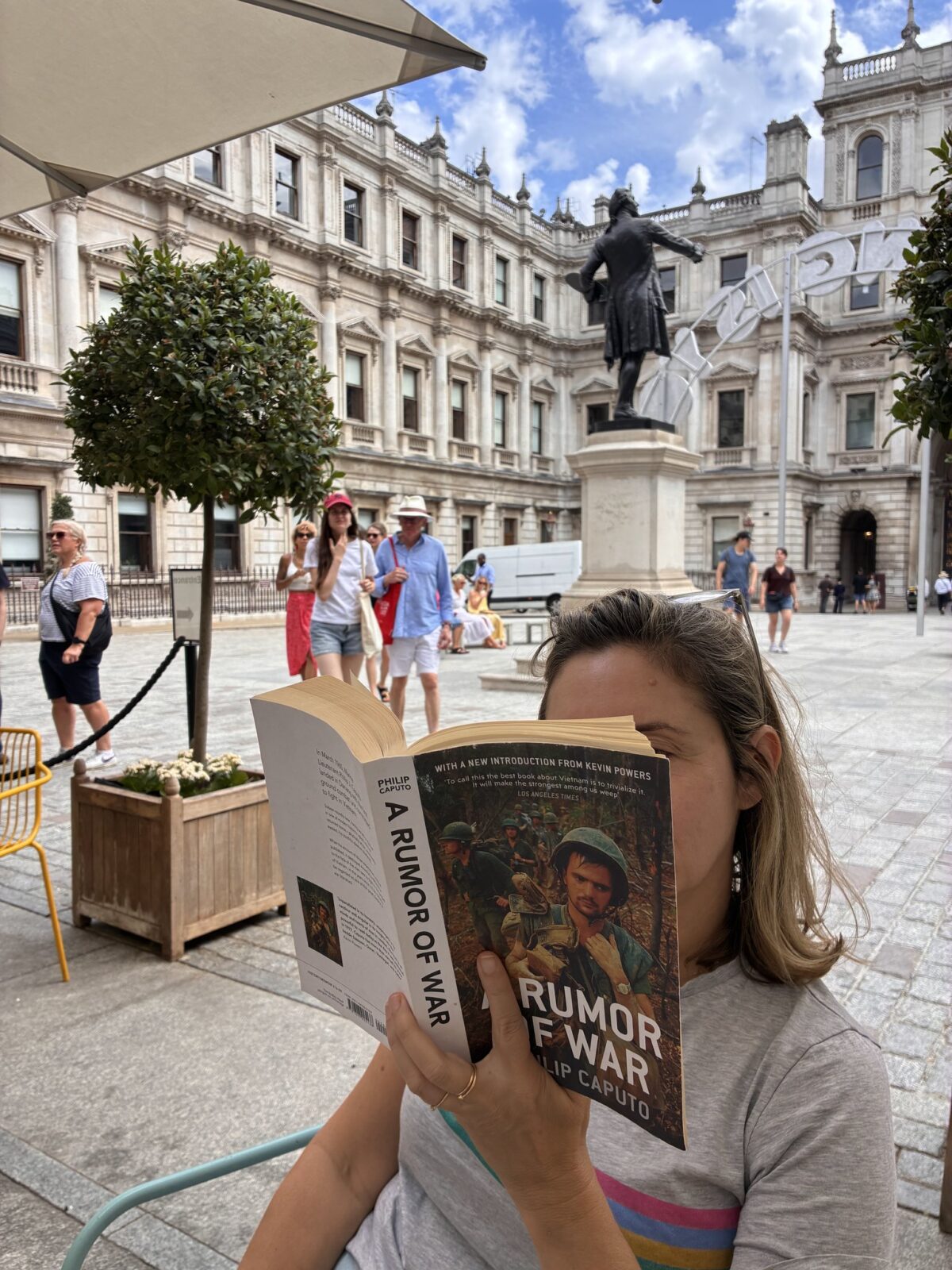
This author died recently, and from his obituaries I learnt that this is widely regarded as one of the best memoirs of the Vietnam war. It’s as bleak as you would imagine; it’s also kind of annoying.
Fellow soldiers die of heat exhaustion; his squad spends all its time on minor skirmishes with no clear front line; he gets assigned a desk job that involves counting corpses on both sides. One time, he sees pigs eating napalm charred bodies. In summary, it’s bad. Really bad. He’s not enjoying himself. Bizarrely, he is surprised by this. Like: what?
Who goes to war and thinks it going to be great? Apparently the answer is: this young guy. He thought it was going to be all glory and valour. It’s not like this was just before WWI, where the early idealism of the young men can be explained by the fact that there hadn’t been a major war in Europe in a hundred years. In Vietnam, WW2 veterans are still alive! Korean war veterans are actually serving! What was he thinking?
In any case, he learns his lesson the hard way. It’s grim reading. Here he is in the Introduction, to give you a flavour:
‘Finally, this book ought not to be regarded as a protest. Protest arises from a belief that one can change things or influence events. I am not egotistical enough to believe I can. Besides, it no longer seems necessary to register an objection to the war, because the war is over. We lost it, and no amount of objecting will resurrect the men who died, without redeeming anything, on cavalries like Hamburger Hill and the Rockpile.
It might, perhaps, prevent the next generation from being crucified in the next war.
But I don’t think so.