MOTHERHOOD by Deborah Orr

I spent this entire memoir waiting for the other shoe to drop.  It’s written with the strong implication that the author has been profoundly traumatized by her childhood, so I kept waiting for the trauma to happen.  There are many times when she tells us she doesn’t want us to think too harshly of her parents, and indeed she succeeded, because as far as I can tell they were pretty good. 

Here is a comment from her mother, that she regards as scarring:

“When I was having you, Deborah, your dad said to me, ‘As far as I am concerned, the chicken comes before the egg.’  Wasn’t that a lovely thing to say?”

I really don’t see it.  What husband wouldn’t prioritize his wife over a fetus? 

She finds out her parents don’t have much sex.  This is not any of her business, in my view.  But it in her view:  “It’s the shocking secret at the heart of my existence.” 

I can only say: ? 

Perhaps the problem is this is my second memoir of a de-industrializing Scotland in the seventies in under a month, and the first was the magically good SHUGGIE BAIN.  They are really not in the same league.  Let me give you a sample of some insight from this one:

People.  We are so tough and so fragile, both at once, we humans

OKAY.  I don’t want to be mean.  But it really wasn’t my favourite.

FAMILY LIFE by Akhil Sharma

You wouldn’t think there was any more space left in the world for another novel of the American immigrant experience.  Apparently there is, and here it is. 

FAMILY LIFE is about a boy who moves from India to the US with his family as a child. 

The charm of the novel is Sharma’s creation of a child’s eye view of the world, direct, assured, sometimes kind of racist.    Here’s two pieces on his father:

I used to think my father had been assigned to us by the government.  This was because he appeared to serve no purpose. 

And:

While my mother was interested in status, being better educated than others or being considered more proper, my father was just interested in being rich . . . Because of my grandfather’s problems, my father had grown up feeling that no matter what he did, people would look down on him.  As a result, he cared less about convincing people of his merits and more about just owning things.

The family are on the path of hard work and immigrant grit when his SPOILER ALERT older brother is in an accident that leaves him brain damaged.  Things get much harder from there.   Side point,  I love this:

Weeks passed.  The weather got colder.  The days tipped backward into darkness.  Some evenings our house and street appeared dark while the sky was light.  In October the trees shed their leaves, and our houses stood undefended on its lawn.

He works hard in high school, has a girlfriend, goes on to university, and becomes a miserable investment banker (is there another kind?).  I liked this thought on his girlfriend:

Minkashi lives in Texas now.  She is an accountant.  This surprises me because you always expect people who matter a great deal to you to end up leading glamorous lives

A really good book. I shall look for his other novel. 

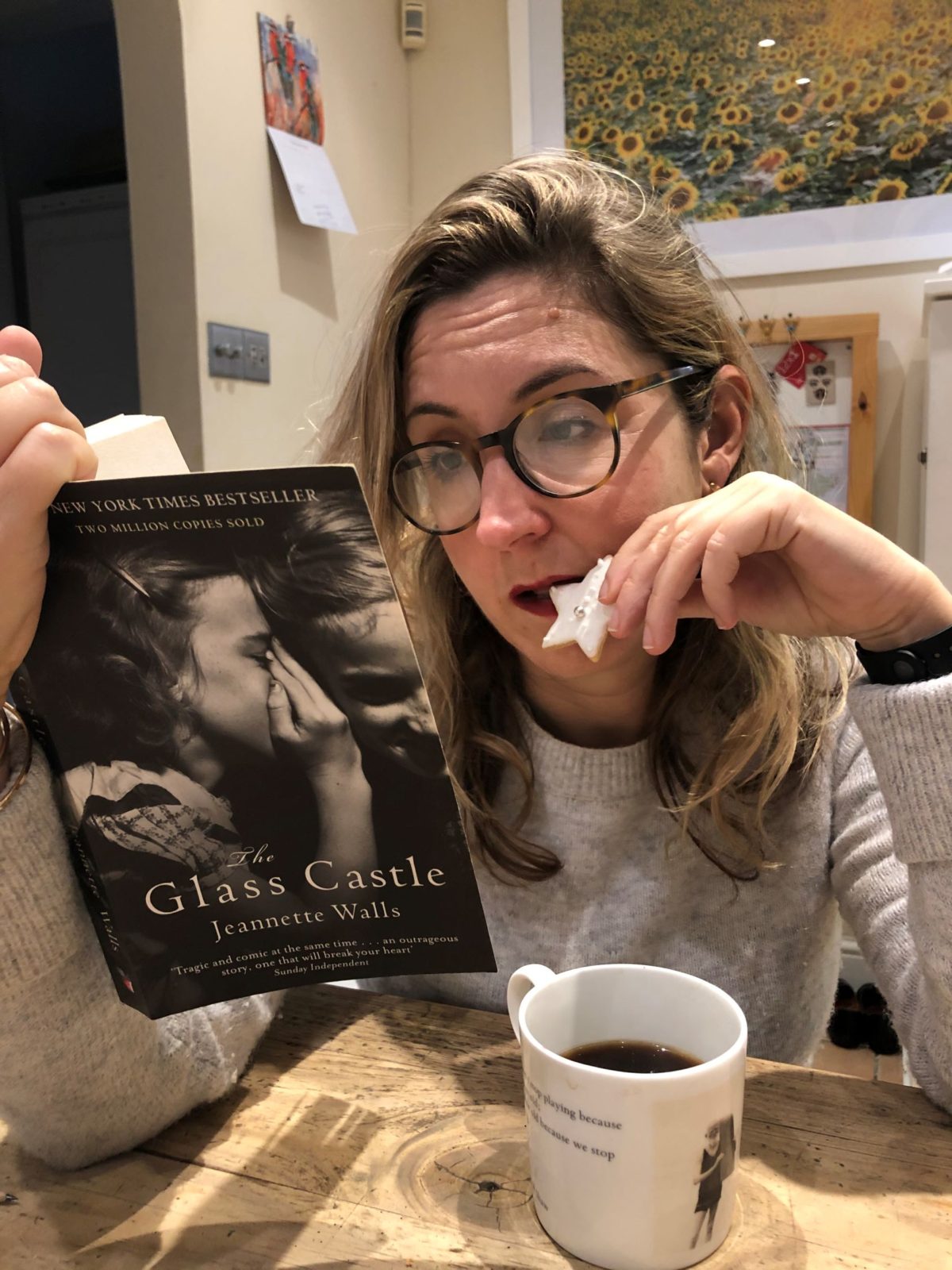
THE GLASS CASTLE by Jeannette Walls

In this memoir, a wealthy gossip columnist lives on Park Avenue while her parents live on the streets.  Bizarrely, your sympathies are 100% with the gossip columnist.

There are many memoirs of rough childhoods.  Usually, this comes from some clear cut cause, as for example addiction, mental illness, etc.  Here, it seems to come from an over-abundance of romance and self-indulgence. 

The dad kind of has a semi-excuse, being an alcoholic.  But first, weren’t most peoples’ dads alcoholics in the 1970s?  I’m not really sure that that cuts it. And second, he declines the most basic of help (e.g.,food stamps) even when he is sober.  And this is when these small kids have not had anything other than popcorn to eat in three days. 

The mum meanwhile is a whole other story.  She refuses to work, despite being a trained teacher, for the strong reason that she does not want to.  She wants to paint, write novels, and eat chocolate. When they do get her to briefly work, she complains every morning: “I’m a grown woman now.  Why can’t I do what I want to do?”  

I mean I can’t say I don’t see where she is coming from.  Less attractive is when she tells her daughter, who has been groped, that sexual assault is a “crime of perception,” and even less attractive is when she hides a family size Hershey bar from her very hungry children so she can eat it herself.

The parents are well educated, and so early on, while they are still young and maybe classifiable as ‘alternative,’ they do provide the children with lots of excitement and interesting experiences.  Over time though, without money, ‘alternative’ becomes ‘gross.’  Their children escape them to go live in New York, where they mostly thrive. The parents follow, and weirdly decide to be homeless, despite the offer of help from their (remarkably forgiving) kids and – strange twist – the revelation that the mother owns very valuable land in Texas, and has done for their entire, impoverished lives.

The book has a highly suspicious amount of detail about the author’s life before the age of ten.  I googled it when I was done, fully expecting lots of libel suits, but apparently her family agrees that this is indeed, really bizarrely, how this all went down.   I finished the whole thing in a night, something I haven’t done in a while.

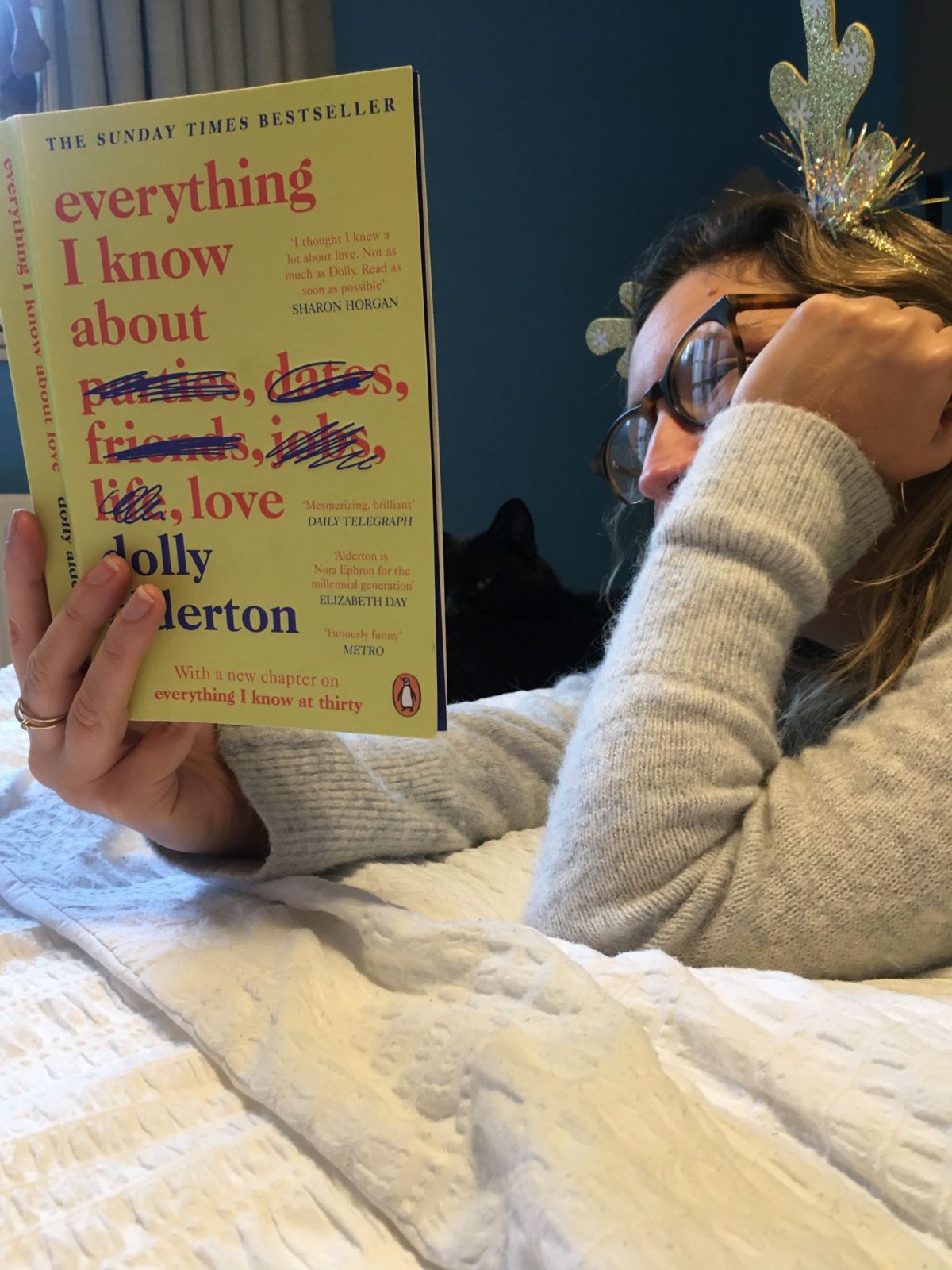
EVERYTHING I KNOW ABOUT LOVE by Dolly Alderton

Here is a book to make you really feel like an immigrant.  You live in London for a majority of your adult life, you think you fit in, then you read a book by an actual Londoner and you realize you’re still and always a visitor. 

It’s not so much the extremely specific London references she makes, but the confidence with which she makes them: as if she is sure that many people share the same experience as she does. I can only ever aspire to feel that way.  (That said, I did laugh at those references I did understand. When her friend gets married she fears she will end up having to go out with the husband’s “friends and their wives at barbeques in bloody Balham.”  But this is not funny to you if you don’t know London, which is my point)

The book is a series of essays about various relationships that the author had in her twenties.  As befits any even half-feminist writer, these are not all romantic.  Despite the book’s title, they are not even mostly romantic.  Much of the book is about the various female friends she lived with in houseshares across North (of course) London. 

I always find something creepily hetero-normative about people who only have friends of their own gender.  But I still found this part of the book quite touching.  It reflects what is true, is that unfortunately Prince Charming may come late, and even when he does, he can only do what he can do.

She has an intense and lengthy online relationship with a man, who she meets for one remarkable late night date, and then never hears from again.  She is upset, but as she puts it: .. like a child mourning the loss of an invisble friend. None of it was real. . . We played intensity chicken with each other, sluts for overblown, artificial sentiment and a desperate need to feel something deep in the dark, damp basement of ourselves

This I thought was interesting, as was this:

To be an empirically attractive young man, you just have to have a nice smile, an average body type (give or take a stone) a bit of hair and be wearing an all-right jumper. To be a desirable woman – the sky’s the limit. Have every surface of your body waxed. Have manicures every week. Wear heels every day. Look like a Victoria’s Secret Angel even though you work in an office. It’s not enough to be an average-sized woman with a bit of hair and an all-right jumper.

I don’t think this is true anymore.  These days, younger men face just the same body fascism as women do, and possibly more I think.  They have to find a way to fit in those skinny jeans. I feel sorry for them but also like hahahahahahhaa welcome.

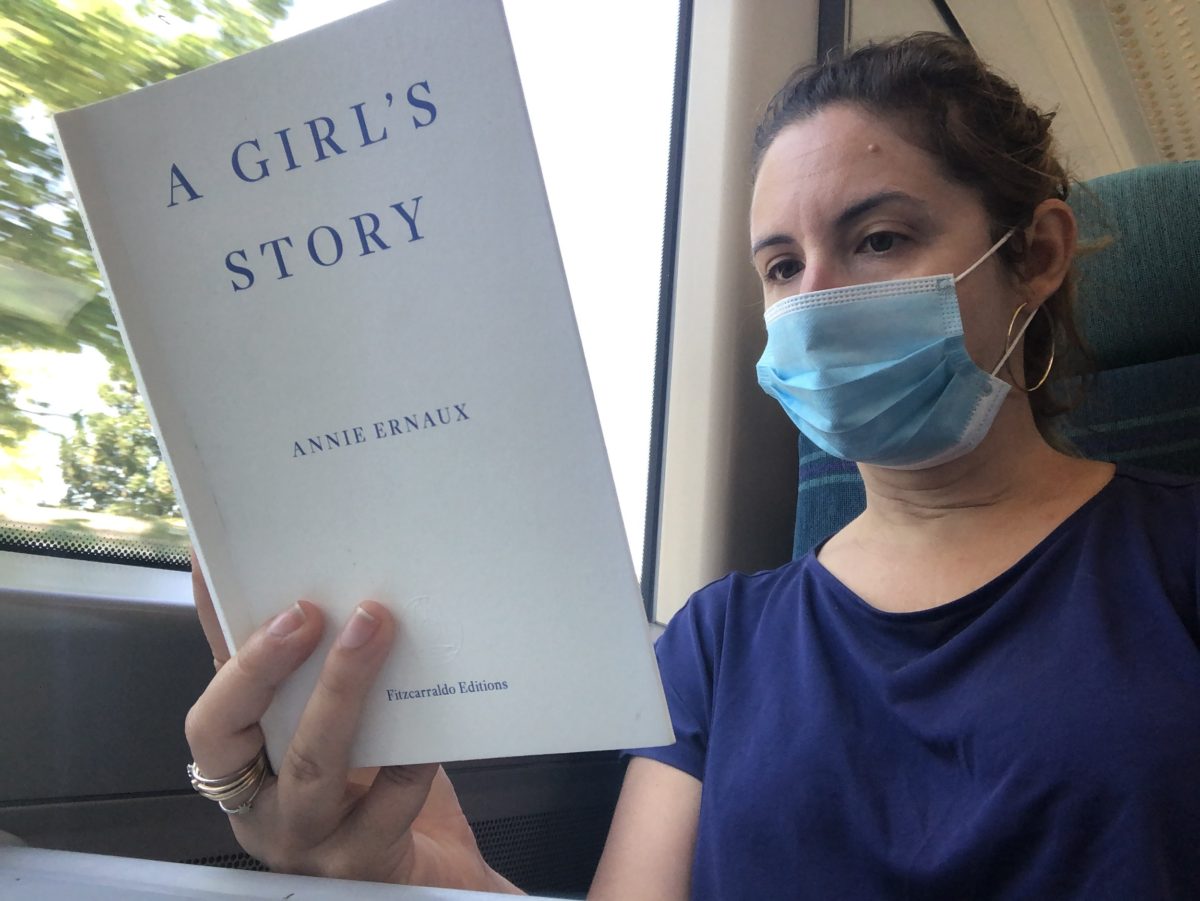
A GIRL’S STORY by Annie Ernaux

Here is a memoir about a summer of sex and fun.  It drips with shame.  I’m not sure why.  I guess in 1958, things were different for girls.  She’s French, she’s seventeen, a counsellor at a summer camp, and gets into it with a bunch of the boys.  If someone got that much action today it’d be all over her Instagram.  But that’s not how she takes it:

I am endowed by shame’s vast memory, more detailed and implacable than any other, a gift unique to shame. 

There is one boy she is particularly in to, and when she finally gets with him (after a fondue party (!)):

There is no sense of degradation, no room for anything but raw desire, chemically pure, as frenzied as the drive to rape, this desire for H to possess her, take her virginity. 

It’s like: sweetheart. Why you on about degradation?  It’s fine. You are allowed to want to have sex.  The whole thing is however swift and painful.  I’m too big, he helpfully tells her.  Also, he comforts her with the information that “often women do not climax until after giving birth”  

She is so bothered by what she did over this summer, and the ensuing rejection by this prince of a guy, that she develops bulimia and stops menstruating.  Then, she reads Simone de Beauvoir’s THE SECOND SEX.  Her life is transformed. She is:

. . .awakened to a world stripped of the appearances it had worn only days before – a world in which everything from the cars on the Boulevard Yser to the necktied students she meets  . . signifies the power of men and the alienation of women

It’s hard to imagine what it would be like having to survive your adolescence without even the basic vocabulary of feminism.  I found it very touching, because I read earlier de Beauvoir’s MEMOIRS OF A DUTIFUL DAUGHTER, where you learn how very hard she fought herself to own her ideas, and it is interesting to see what a gift they were to others.  Still, says Ernaux, understanding your shame does not make it go away. She is thus impelled to write this account of that eventful summer. She writes to understand it:

It is the absence of meaning in what one lives, at the moment one lives it, which multiplies the possibilities of writing

This is I think an interesting observation, but overall there was a good deal too much of this.  Ernaux is now an older lady, and spends too much of this memoir reflecting on what writing means in general, and describing in detail how she looked these boys up on this ‘Internet’ she insists on capitalizing.   Like no one ever stalked an ex- before. 

However it was interesting to see how she came to feel so ashamed, and how she hauled herself at least half way out of it. 

RUNNING WITH SCISSORS by Augusten Burroughs

Here is a book about what happens when there are not enough social workers.  Augusten Burroughs parents are getting a divorce:

My father grew hostile and remote .  . . And my mother began to go crazy.  Not crazy in a let’s paint the kitchen red! sort of way.  But crazy in a gas oven, toothpaste sandwich, I am God sort of way.  Gone were the days when she would stand on the deck lighting lemon-scented candles without then having to eat the wax. 

She eventually give over her son to live with her psychiatrist, Dr Finch, who believes children over the age of thirteen should be completely free.  He also believes that he direction of his poop in the toilet bowl contains messages from god, as does choosing Bible verses at random.  His oldest daughter preserves his poops on an outdoor table, and checks the Bible for him for all sorts of questions.  The other children, some biological, some not, are left quite free, to knock sunroofs into the ceiling (by just making a hole), to eat dog food, and to get raped by adults.  Apparently when children are completely unsupervised it does not take long for predatory types to recognize this as an opportunity. 

At 14 he has a relationship with a 33 year old man that he believes is loving.  So too does the 33 year old, who makes such red-flag covered statements as the below:

I mean my feelings for your are so huge, I don’t think I can contain them.  Sometimes I want to hold you so tight it scares me.  Like I want to hold you until the life is gone, so you can’t ever vanish.

The book is comic, and he is close to some of his step-siblings, so it is not as bleak as the statutory rape would have you believe.  But I see from Google that the Finch family sued, arguing that much of what was in the book was fiction, and now the book  is marketed as a ‘novel’ rather than a ‘memoir’.  They are apparently amazed that someone they looked after at such a time should tell such lies about them.  So I guess it is sad either way: either it’s a sad childhood, or a sad set of lies about a childhood.  Anyway, I enjoyed it. 

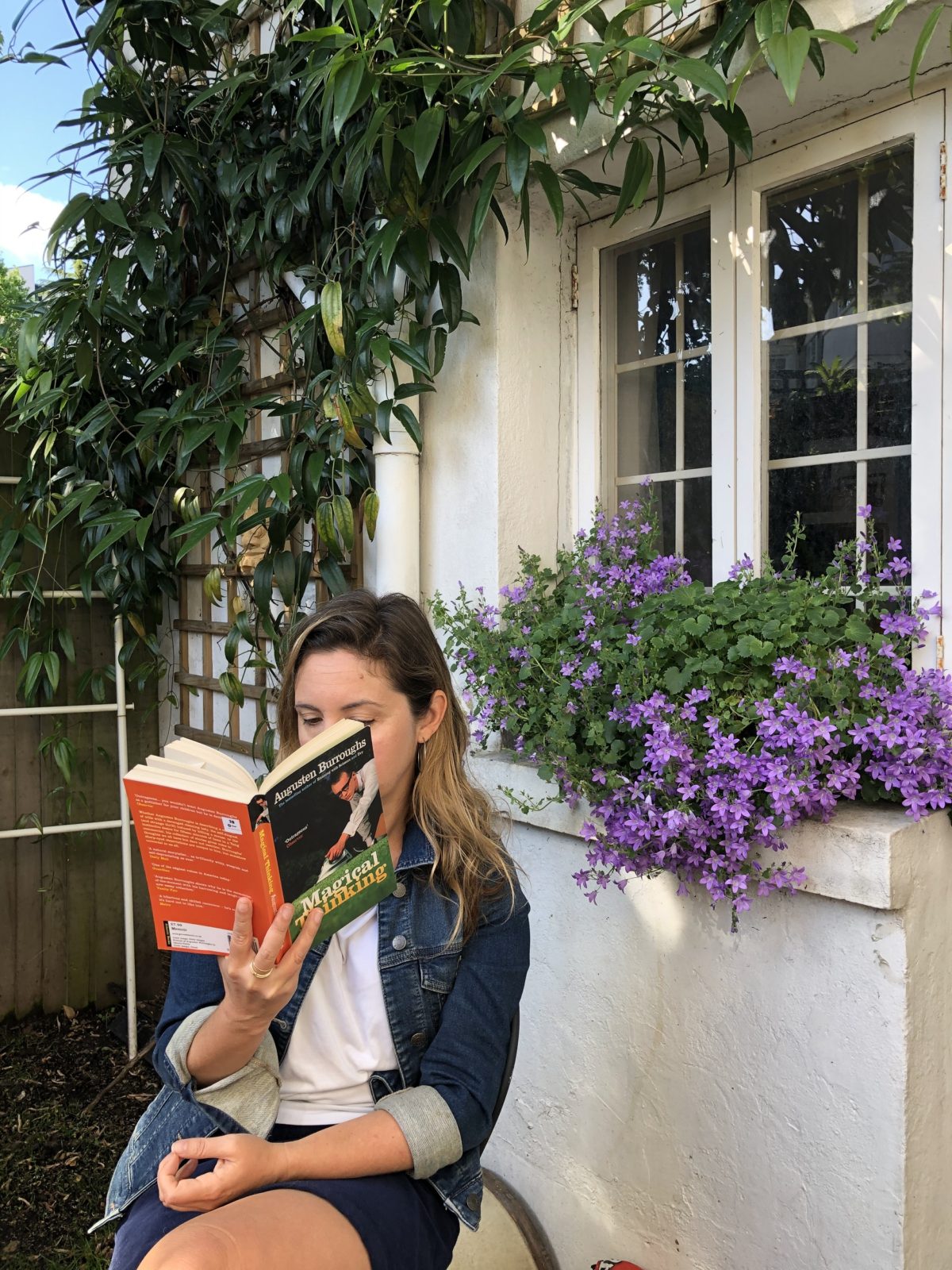
MAGICAL THINKING by Augusten Burroughs

Finally someone with some success in the field of the personal essay!  I enjoyed this one.  Burroughs is a prolific memoirist.  Wikipedia tells me that:

Burroughs’ writing focuses on subjects such as advertising, psychiatrists, religious families, and home shopping networks

This is totally humourless but also pretty accurate. He’s an alcoholic and an advertising executive who is struggling to date in New York.  He has some serious #firstworldproblems, as below, but so do we all

Last weekend, I spent Sunday in a Starbucks writing Amtrak TV spots.  I was drinking double espressos and really trying to be positive instead of enraged and spoiled.  One of my problems is that I have completely disconnected those blue envelopes my paycheck arrives in with doing any actual work.

I particularly enjoyed his problematic love life

He’s blown me off and is hoping that I’ll just get the message and go away. It’s the modern, passive, gay way to be direct.  I know this behaviour because it’s something I would do.  This is how compatible we are. 

And:

I’m starting to go a little crazy, needing desperately to be in control of the situation and feeling terrified he won’t fall in love with me and knowing that I can’t even know what my own feelings are until I know that he’s safely in love with me so then I can decide. 

And:

He knows I write every day for hours but has no idea that all I’m writing about is me.  I tseems wiser to let him think I’m an aspiring novelist instead of just an alcoholic with a year of sobriety who spends eight hours a day writing about the other sixteen.

I do always wonder about this.  These writers who produce a lot of content about their own lives, how do they do it?  Physicists I guess think a lot about physics.  Memoirists think about memories.  I’m torn.  Are they having deeper lives because they are thinking about them more deeply?  Or is it just all rather creepy and they ought to get out more? 

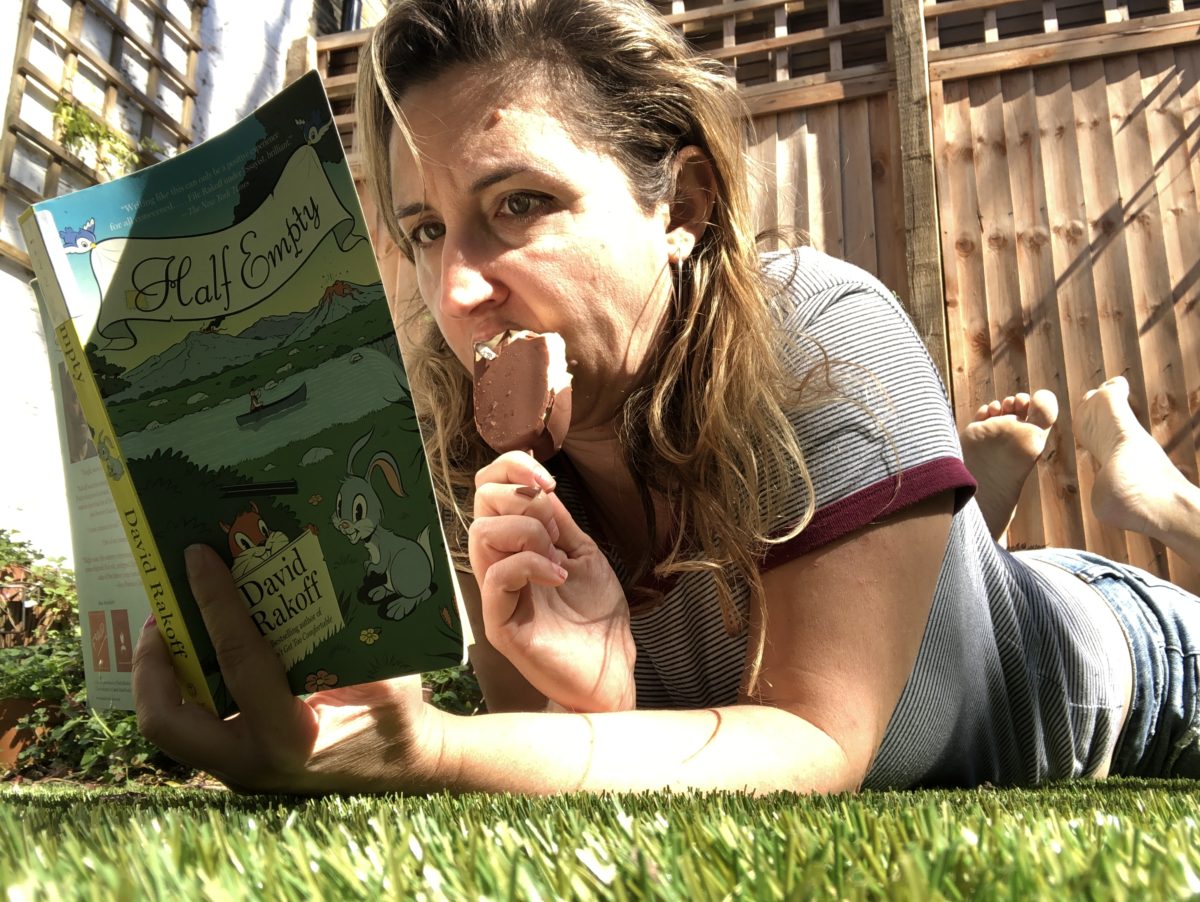
HALF EMPTY by David Rakoff

Here is another example of how hard it is to write the personal essay.  Truly, it is a formidable form. 

I did enjoy this part, where he lays into the musical Rent for avoiding the inalienable fact that one of the hardest parts of being an artist is in fact paying rent.  He doesn’t like any suggestion that art is glamorous:

. . . the only thing that makes you an artist is making art.  And that requires the precise opposite of hanging out; a deeply lonely and unglamorous task of tolerating oneself long enough to push something out. 

. . . . . . most folks would opt for the old fantasy of the carnal chaos of drop clothes, easels, turpentine, ratafia-wrapped Chianti bottles  . . . forgetting momentarily the lack of financial security and the necessary hours and hours of solitude spent fucking up over and over again.

These essays may not be so wonderful, but he at least suffered over them.  Also this I  found this interesting.  Not many people will admit that children can be unattractive, and certainly not themselves as children:

Tight as a watch spring, skittish as a Chihuahua, when I wasn’t bursting into tears, I covered my over-arching trepidation with a  loud-mouthed bravura.  I was highly unpleasant.  I am not fishing here.  It dawned on me recently that even though I have published books and lived through a bout of cancer, barely a handful of people from my childhood have ever attempted to contact me, and I don’t blame them one bit. 

I did have to give up after a while though.  Try this sentence:

The House of the Future was simultaneously sleek and voluptuous; imagine a gigantic furturistic cold-water faucet: a lovely white plus sign of a building with the  mid-cetnry grace of Eero Saarinen’s TWA terminal, gently inflated like a water wing. 

Indeed, art is hard.

DEPENDENCY by Tove Ditlevesen

I wondered when I read the first book in this autobiographical trilogy why the author was so cheerful about her childhood, which overall looked pretty ropey what with the diphtheria and the rickets and everything.  Having read this third book, about her adulthood, I now understand. Her childhood does look pretty cushy in comparison.

She first marries an old guy largely because he published her first poetry and she wants to be financially looked after by him.  To modern eyes, it’s kind of amazing how straightforward she is about this; but  what I got from reading it is that in the 1940s you were more or less expected to be in a transactional relationship, where you provide domestic work and sex and he provides money.  I know I say this on this blog about once a month but THANK GOD IF I HAD TO BE BORN FEMALE IT HAPPENED NOW AND NOT EARLIER.

Anyway, this guy does not get what he bargained for, because what Ditlevsen is interested in is not domestic work but writing.  This is what she spends her days on

I’m just writing; maybe it will be good; maybe not.  The most important thing is that I feel happy when I’m writing, just as I always have.  I feel happy and forget everything around me. .

Even this is not enough though.  Here she is standing at the window watching young lovers:

I am only twenty years old and the days descend on me un-noticeably like dust, each one just like the rest

She leaves the old guy for WHOLE NEXT PARA IS FULL OF SPOILERS BECAUSE A LOT GOES ON a younger guy, and they have a baby.  She then has a hair-raising illegal abortion, and then gets pregnant again from a one-night stand with this one doctor. She insists he gives her an abortion, and this is where her problems begin, because he uses Demerol during the procedure, and she is immediately addicted.  She leaves her husband to marry this doctor, even though she does not like him and indeed thinks he has mental health issues, so that she can continue to get Demerol. He also gives her methadone, choral, etc.  He also isolates her so no one knows what is going on.  She is close to death when she saves herself by using a moment of lucidity to phone a friend.  She ends up in rehab and her husband in an asylum. 

She recovers and tried to get back with her second husband.  He rejects her.   

I cried when I read his letter.  No man had ever turned me down before.

Like, FYI, Tove, don’t tell people things like that.  No one wants to hear how popular you are.

She fall in love (at first sight!) with a guy who becomes her fourth husband, and he moves her to the countryside, so that it is harder for her to acquire drugs.  

What’s curious about this novel is that despite so much going on – four husbands, two abortions, three children (one adopted, I didn’t even tell you about that), many best-selling books – the appeal of this novel is not at all in its story.  In fact I never read such really salacious material presented so un-salacioiusly.  You feel weirdly connected to the real life of someone in Copehagen decades ago.  Here she is making dinner, about to leave some husband: 

While I’m standing in the kitchen turning on the potatoes, my heart starts hammering and the white tile wall behind the stovetop flickers before my eyes, as if the tiles were starting to fall off.

The strange fascination of this book is its total lack of sentimentality or excuses.  I don’t think I would be capable of giving an account of my life so utterly without justifications or apologies.  It’s really remarkable for its honesty and makes you feel like you maybe know her better than most people you actually do know. 

At the end she seems in a better place, being away from the chemists and their jars of methadone, but I am sorry to say that I checked date of publication and date of death ,and the poor lady only had five years left.  She killed herself in 1976, so while I have not checked Wikipedia I can suppose that indeed the addiction did not let go.  I feel sad about it, as if she just died today, rather than decades before I was born.

I WAS TOLD THERE’D BE CAKE by Sloane Crosley

This collection of comic essays show you how hard it is to write comic essays.  It was an easy read, but let’s just say David Sedaris’ crown is secure. 

It’s my second book in under a week by a young woman living in New York, after MY MISSPENT YOUTH , so perhaps it is just I am a bit tired of the pitfalls of trying to make it in publishing.

It’s kind of dated, having been written ten years ago.  You can tell because she explains vegetarianism like we are going to find it really freaky.  Also the reviews!  I see that some male reviewer at the Guardian comments that he has a ‘tendency to be disappointed by the most well-rewarded female columnists. . . ” As if female columnists are both exceedingly rare and all very similar. 

Some of it however was pretty funny.  Let’s end with her father’s obsession with fire:

For major holiday dinners, there is no such thing as a ‘fire in the background.’  The flaming abcess in the living room is always in the foreground, dominating the attention and the conversation.“It’s a good fire, Denis,” says my mother, standing yards away from it.
My father contemplates this, having conducted a staring match with the fire for almost an hour.  It’s hard to say who’s winning.

To be honest I’ve already largely forgotten this book.  So: nothing further.