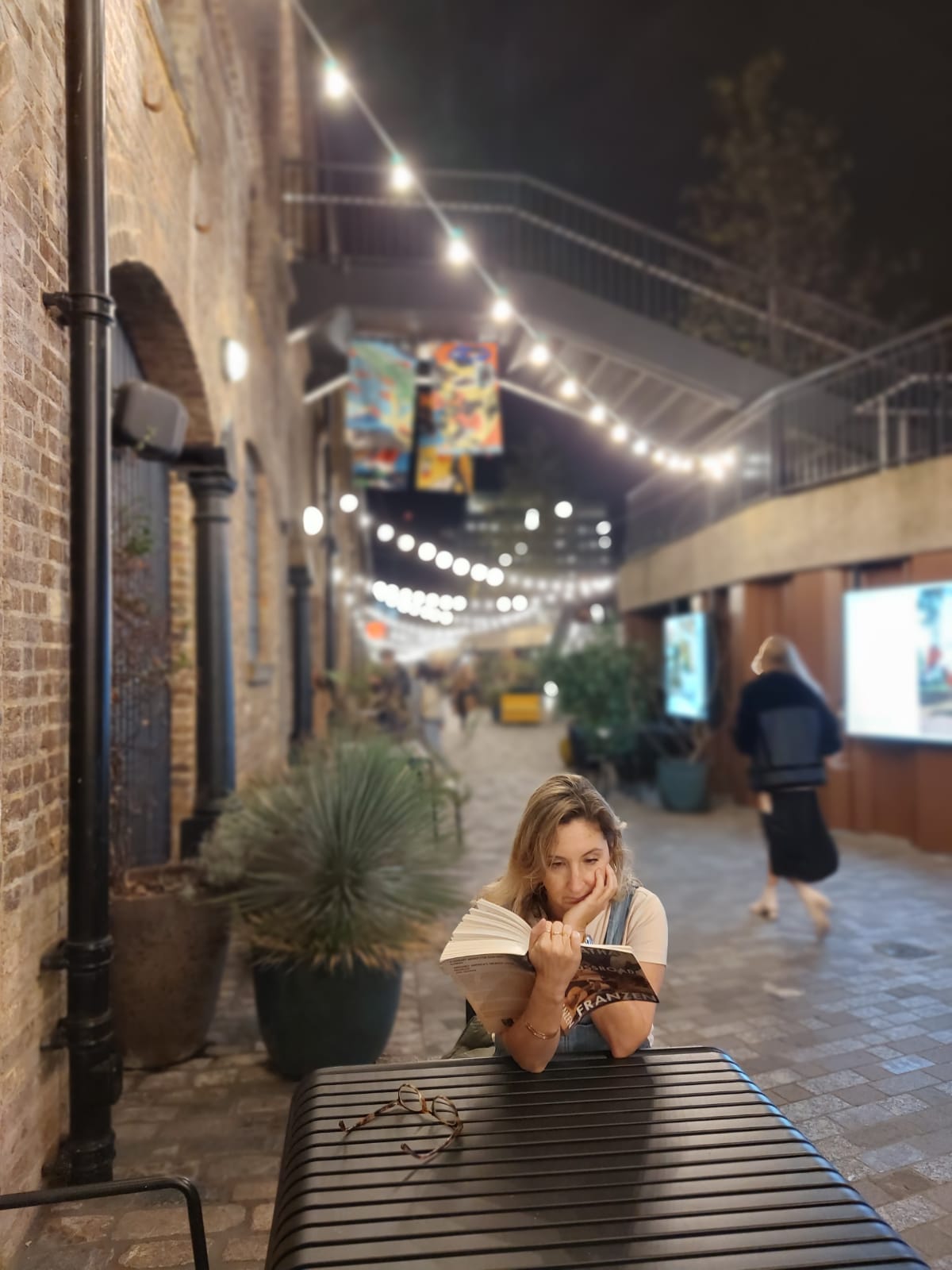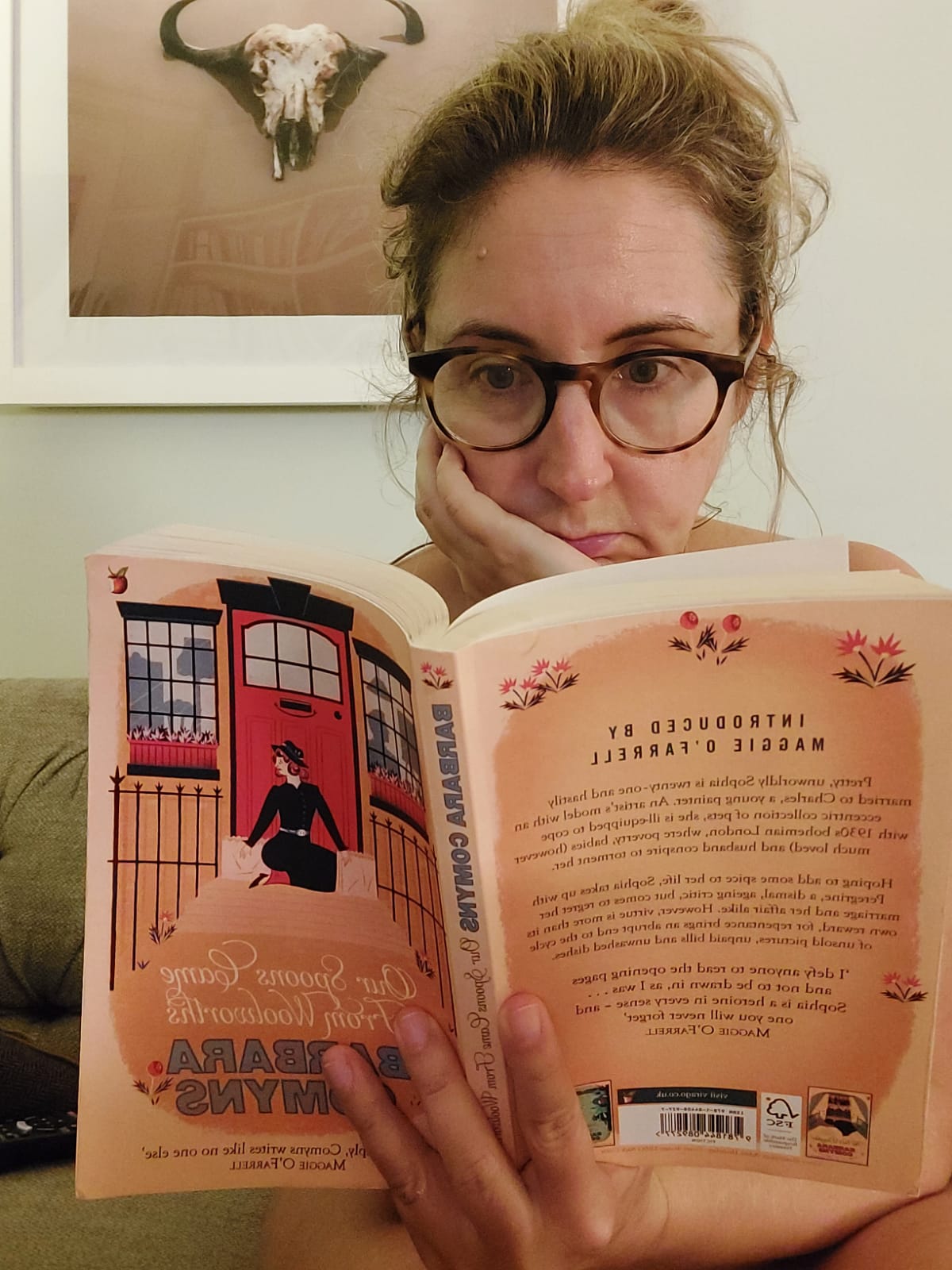
SOME TAME GAZELLE by Barbara Pym

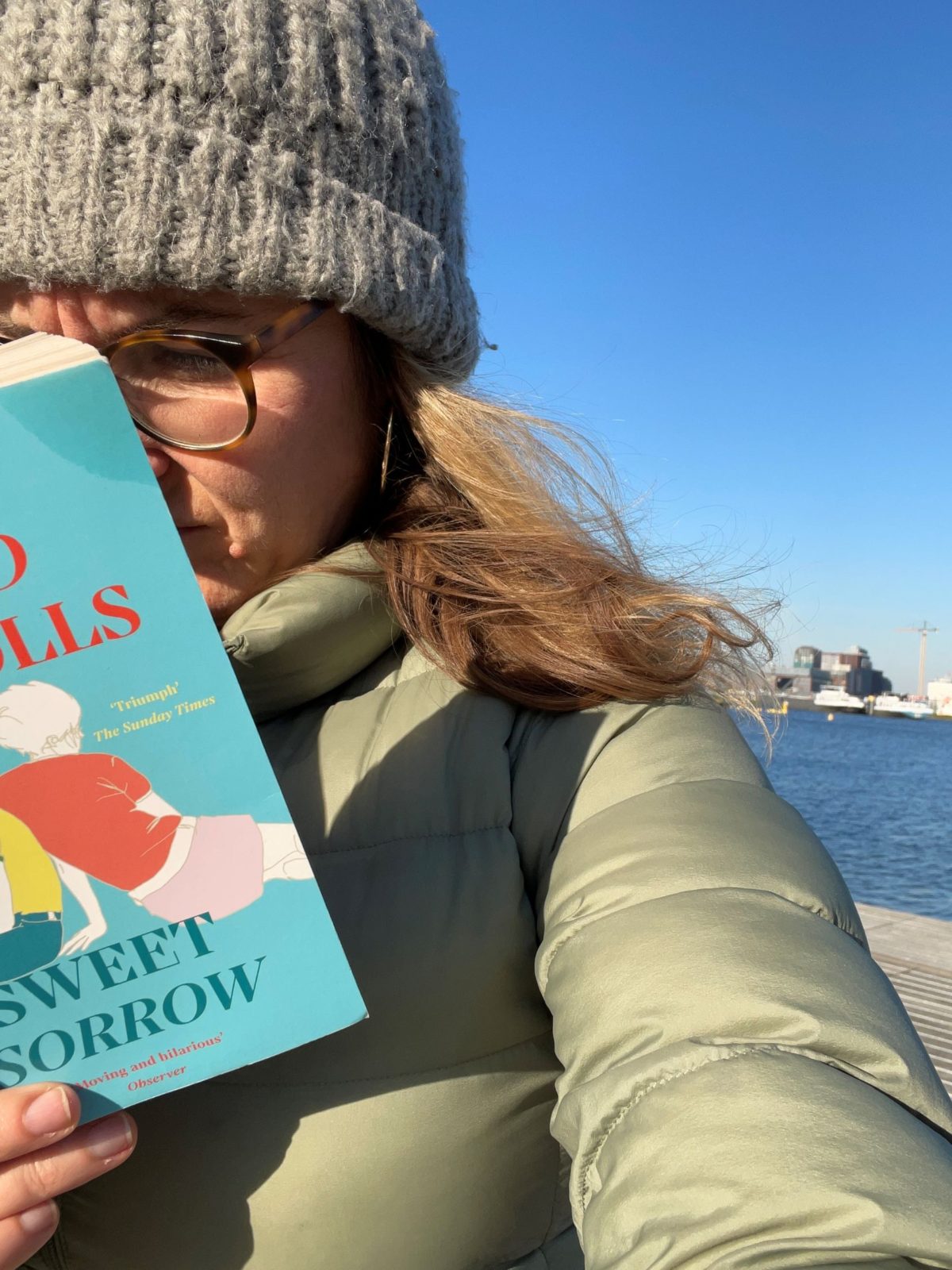
This book is about a pair of middle-aged spinsters living in an English village. It’s a sad, wise novel about the kind of small fantasies we need to keep ourselves going, especially when life has not turned out as we hoped.

Bizarrely, it turns out the author was just twenty-one when she wrote it. Apparently it progress forward her, and her sister, thirty years in the future. Their various university boyfriends also appear, older, fatter, and having rejected them.

The title is based on a poem by Thomas Haynes Bayly:

Some tame gazelle, or some gentle dove:

Something to love, oh, something to love!

One sister is still mooning over the local ArchDeacon, who decided to marry someone else decades ago; the other is always developing crushes on much younger curates, who are continually disappointing her by leaving to evangelize the Africans. Here are the kind of concerns, on knitting for the ArchDeacon:

When we grow older we lack the fine courage of youth, and even an ordinary task like making a pullover for somebody we love or used to love seems too dangerous to be undertaken. Then (the wife) might get to hear of it; that was something else to be considered. Her long, thin fingers might pick at it critically and detect a mistake in the ribbing at the Vee neck; there was often some difficultly there. . . . And then the pullover might be too small, or the neck opening too tight, so that he wouldn’t be able to get his heard through it. Belinda went hot and cold, imagining her humiliation.

Curiously though, both women do receive proposals over the course of the book, and both turn them down; there is an unacknowledged but clear view that in fact, if they could but see it, they are happy as they are, with their gardens and their puddings and their choice of corsetry.

It’s a very delicate little book, almost entirely about women, and domestic matters. I’m amazed, patriarchy being what it is, that it ever got published, because on the surface the concerns it embraces could not be smaller. The point being I guess that life is made up, mostly, of small concerns. And you have to find a way to live it anyway.

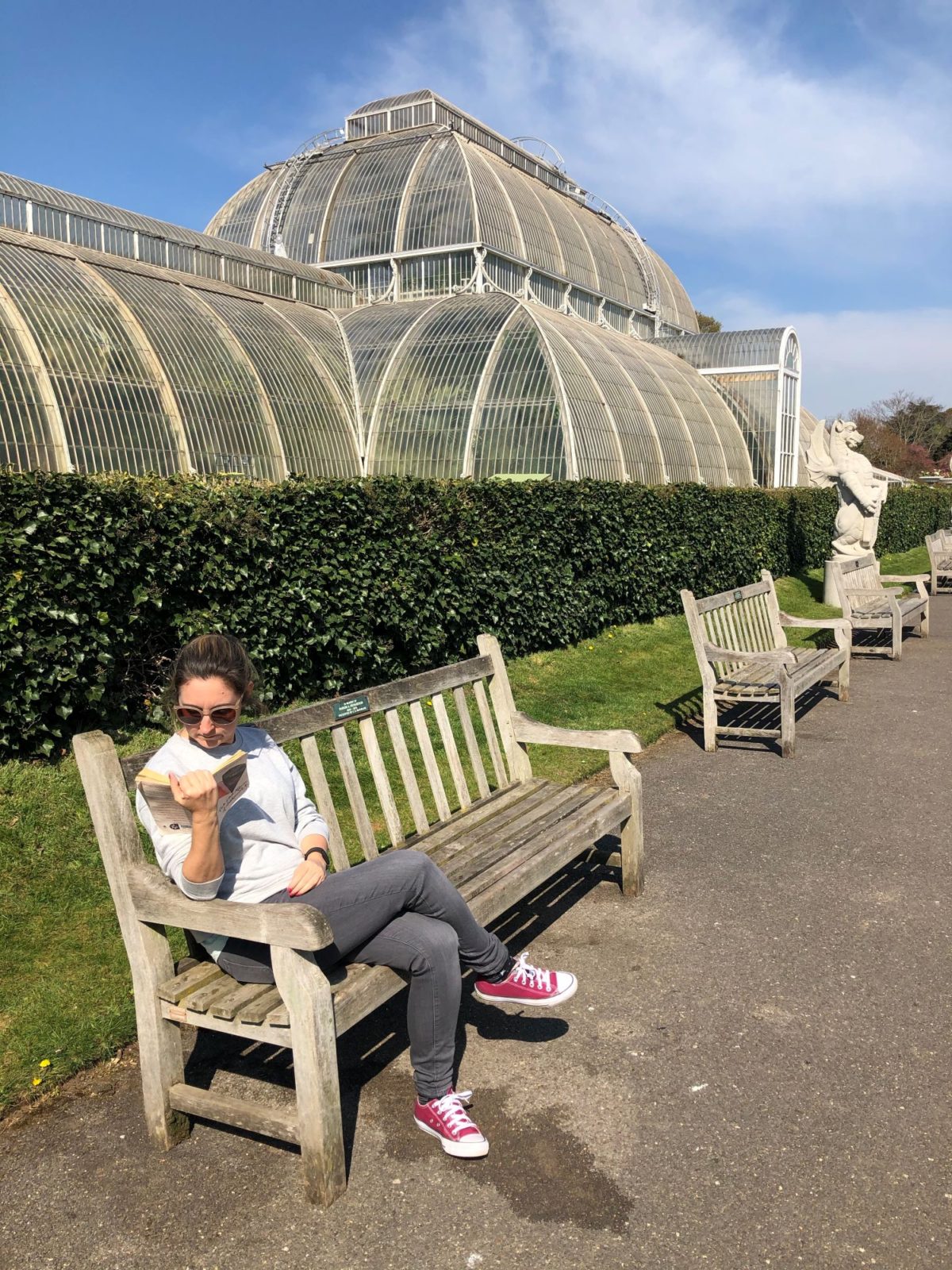
On the picture, by the way: it’s my first audio book!

EARLY WORK by Andrew Martin

This is my third reading of this amazing book (first two are here and here). This time round I re-read it to try and understand how it works. I hoped to understand something about the mystery of good writing, but I am left even more mystified than before. It is so WONDERFUL. How did Andrew Martin DO it? Every other line is funny, and the remainder are either touching or insightful. Did it take him ONE THOUSAND YEARS? A further mystery is this, WHY DON’T MORE PEOPLE LOVE IT? Like how can it be that someone can write such a near perfect novel and the world not close down? That’s the arts for you, I guess. You achieve something near impossible and nobody much cares.

AN OBEDIENT FATHER by Akhil Sharma

I had to give up on this book because it was just too believable. It tells the story of a child abuser, from the perspective of the child abuser. Fiction exists to help us understand others. This is a noble goal. But I guess I just don’t really want to understand all others.

In theory, I suppose we all agree that everyone’s human. Like, even Hitler. And Ted Bundy. And I guess I’ve read quite a few books from the perspective of dictators and serial killers, which I’ve never found it too revolting before. This one though: wow. It’s enough to make me wish there is a hell, so that fathers who rape their children can go there.

As I debated whether or not to give up on this book , I spent quite some time thinking about why it was so unreadable. I think its because at least a serial killer, you think, okay, you are crazy. You are working out some mania. And dictators, okay, they kill people, but at least they are like obsessed with a greater Deutschland or whatever. This guy: he rapes her for a while, and then when he gets caught he stops. So he’s not a maniac. He just wanted to rape her and so he did.

Anyway, I feel gross just writing about it. If you think you can stomach it, though, I will say it is startlingly well written, just like Akhil’s previous book FAMILY LIFE). It’s set in India and in addition to the abuse is also a grim look at how unavoidable petty political corruption is. God no wonder I had to quit.

THE INVENTION OF NATURE by Andrea Wulf

In this book a man with a large unearned income has a great time and inspires lots of others to do the same.

Alexander von Humboldt was so famous that at his centennial in 1869 there were huge parades for him across cities in Europe and America.  He has more things named after him than anyone else who has ever lived (rivers, plants, geographical features, a part of the moon).  And yet, today, it is a bit: Humboldt Who?

Humboldt did not identify or discover anything in particular.  What he is famous for is his worldview.  He put forward the idea, revolutionary at the time, that nature was fragile, heavily interconnected, and at great risk from human intervention.  It’s an insight that was so influential that today it sounds obvious. 

It was not an easy road for Humboldt.  Okay, I lie, it was a pretty easy road.  He had a wealthy mother, so the second she died he stopped pretending to study medicine and was off to South America with his boyfriend (or as he liked to call him, his botanist).  He went there allegedly to discover the tributaries of the great Orinioco river, which surprised the locals, who knew them well and to his disappointment could describe them in detail.  While there he studied everything from the colour of the sky to the nature of the soil, and came to a forest of conclusions, almost all of which are correct: he invented isotherms, he identified deforestation, he called it on tectonic plates; he even flagged the dangers of ‘great masses of steam and gas’ coming from cities.  He categorically condemned slavery and the idea of racial inequality in terms that are almost shockingly modern.

After covering Humboldt’s long and cushy life, the book goes on to cover all the many other naturalists who were inspired by him, including Darwin, Thoreau, and Marsh.  Probably not coincidentally, these guys also had a ton of unearned income.  They also had disapproving parents, who either died or got worn down by their sons’ enthusiasm.  And there is a LOT of enthusiasm.  Here’s Darwin to his father:

I am at present red-hot with Spiders!  

Humboldt got so excited that when he ran out of paper he would just scratch away at his desk rather than stop writing, and he did begin to worry he was losing his mind.  Muir, meanwhile, is reported by a guest to have run out of his cabin when the earth started to shake shouting happily: “A noble Earthquake!!!”   He was apparently excited to study it.  But one does wonder on his methods, as he later wrote to Emerson that “he had asked two violets what they thought of the earthquake, and they had replied ‘it’s all love’.”

Marsh was probably my favourite, partly because he was one of the only ones who had to find a way to fit his passion in around actually having to work for money.  As he put it, earnestly, in a letter, explaining the kind of job he was after:

small duties and large pay . . .

I mean aren’t we all.  Eventually he gets a job as an ambassador, which gives him lots of time to consider irrigation around the Nile, but still he complained:

I have been entirely disappointed as to the rest and relaxation I looked for

Oh sweetheart.

I have been strangely educated on many topics by this book. That there were 15,000 ships a day entering London in 1802; that the state of Nevada was nearly called Humboldt; etc.  But I think what I mostly take from it is the fact that you can for sure live your best life.  Now, I am rather jealous that probably no one can ever be as true polymath, as Humboldt was, as there is now just too much to know.  And of course, the money thing is a problem. But I am inspired by the joy these guys took in what they were doing, how they poured all their lives into having a wonderful time. 

As John Muir put it:

I’m in the woods, woods, woods, & they are in me-ee-ey

And who cares what anyone else thought. 

THE HANDMAID’S TALE by Margaret Atwood

I enjoy a feminist dystopia as much as the next person, but in this case, maybe just stick with the TV show.

THE HANDMAID’S TALE is set in an alternative future where fundamentalist Christians have taken over the USA.  Women have been returned to exceedingly traditional gender roles, i.e., gross old guys get whatever they want.  They have wives, they have female servants, and they have concubines.  Sounds pretty sweet.  I mean for the gross old guys.  Grisly for everyone else. Atwood said one of her rules in writing it was that no atrocity should be included that had not actually happened in history, and it is depressing to contemplate how much of this future dystopia is basically just a re-telling of the past. 

It reminded me a bit of STEPFORD WIVES, in which ordinary men are given the option to have their wives’ brains rewired to produce a ‘perfect’ woman.  What makes that book so compelling is how believable it is that given the chance, most men would take that option. 

So, it was interesting; but I can’t say I enjoyed this book that much.  It was all a bit lyrical and literary for me.  There were some very questionable dreamlike sections.  The TV show cut all those bookish bits.  The book without the book.  Much better!

FIND ME by Andre Aciman

Never ever read the sequel to any novel you have loved.  I take this as a general rule. There’s a risk that what you found heart-breakingly unique is in fact a tired old trick of that particular author, and the novel you love will be tainted in retrospect. I broke this rule by reading FIND ME, a sequel to the wonderful CALL ME BY YOUR NAME, and yes, it was a big mistake.

CALL ME BY YOUR NAME is the story of  Elio, and his teenage infatuation.  It a powerful and terrifying story of the one who got away.  In FIND ME, the father of Elio, who is in his fifties, meets a beautiful twenty-something woman on a train, and they begin a wild romance. 

I mean, okay.  I’m not saying this could never happen, but for sure in this telling it seems unlikely.  Even if you assume a lot of unspoken daddy issues, there is just no way a 24 year old is referring to some old guy’s penis as a ‘lighthouse’ and listening to him talk awkwardly about Goethe.  I don’t want to be super harsh, but it kind of read like an extended and slightly pitiful exercise in wishful thinking by a middle-aged man.

Part way through the book we go back to Elio himself, who is now in his thirties.  And there I had to stop.  So far it had just been such a lot of unmotivated and unlikely drivel, I just couldn’t face the character being polluted by more of the same.  So luckily I can’t tell you how it turned out.

WAR AND TURPENTINE by Stefan Hertmans

Here a man uses his grandfather’s actual diaries to recreate life in the early twentieth century.  It starts off interesting – for example, we learn how many very specific scents are lost to us.  Here he is on his great-grandmother:

Her black apron – he called it a pinafore – smelled like the offal of young rabbits

Horrifyingly specific.  Then we get into flashforwards, where we follow the author around modern day and very dull city of Ghent.  Things go rapidly downhill. It is not easy to write about the book you are writing.  Emmanual Carrere manages it, but few others can, and certainly not this writer.  Enjoy:

. . . I would scarely recognize the area.  Wild geese, a few sluggish swans in the polluted riverside mud, nervous moorhens in the black, oil-soaked mire.  Damaged nature, memory.  Pom-pom-pom, pom-pom-pom.  Humming, I walk out of the old cemetery.  But in the twilight, as I revel in the adagio strains of Edvard Grieg’s ‘Ase’s Death,’ that superlative mourning music for a dead mother, I see, in my mind’s eye, the old phantoms far above me, flickering titanically on the walls of a cave, blown up into eerie shapes by the light of a fire beyond my ken.

This is where I stopped.

DEPT OF SPECULATION by Jenny Offill

Here is someone who has a mental breakdown because she gets cheated on.  I don’t know, I know it’s not very nice, but my view is: toughen the f**k up. 

Partly this view comes from the fact that this novel refuses to give any character a name, calling the main one ‘the wife,’ and the other one ‘the husband.’ I always find this profoundly pretentious.  Even worse, at the end, it abruptly shifts to using the first person singular.  I mean: VOM.   And all this to mostly tell the story of this couple who moves out of Brooklyn to the suburbs because it is cheaper. 

That said, here are two things I did like:

One, a quote from an 1896 book on advice for brides:

The indiscriminate reading of novels is one of the most injurious habits to .which ‘a married woman can be subject.  Besides the false views of human nature it will impart . . . it produces an indifference to the performance of domestic duties, and contempt for ordinary realities

I have long wondered why I am indifferent to domestic duties.

Two, this which I find sadly and profoundly true:

But now it seems possible that the truth about getting older is that there are fewer and fewer things to make fun of until finally there is nothing you are sure you will never be.

YOUR BEST YEAR YET by Jenny Ditzler

A re-read of a book from a couple of years ago. I read it again to help me get some discipline and produce some new year’s resolutions. 2021 has to be a better year than 2020, just vaccines alone, but I’m hoping to give it a push. The blog of last time I read it is here. It’s a pretty good book, I recommend it.

FAMILY LIFE by Akhil Sharma

You wouldn’t think there was any more space left in the world for another novel of the American immigrant experience.  Apparently there is, and here it is. 

FAMILY LIFE is about a boy who moves from India to the US with his family as a child. 

The charm of the novel is Sharma’s creation of a child’s eye view of the world, direct, assured, sometimes kind of racist.    Here’s two pieces on his father:

I used to think my father had been assigned to us by the government.  This was because he appeared to serve no purpose. 

And:

While my mother was interested in status, being better educated than others or being considered more proper, my father was just interested in being rich . . . Because of my grandfather’s problems, my father had grown up feeling that no matter what he did, people would look down on him.  As a result, he cared less about convincing people of his merits and more about just owning things.

The family are on the path of hard work and immigrant grit when his SPOILER ALERT older brother is in an accident that leaves him brain damaged.  Things get much harder from there.   Side point,  I love this:

Weeks passed.  The weather got colder.  The days tipped backward into darkness.  Some evenings our house and street appeared dark while the sky was light.  In October the trees shed their leaves, and our houses stood undefended on its lawn.

He works hard in high school, has a girlfriend, goes on to university, and becomes a miserable investment banker (is there another kind?).  I liked this thought on his girlfriend:

Minkashi lives in Texas now.  She is an accountant.  This surprises me because you always expect people who matter a great deal to you to end up leading glamorous lives

A really good book. I shall look for his other novel.