
THE GUN by CJ Chivers

This book is a history of the AK-47, and thus essentially a history of war for the last century. It makes for depressing but enlightening reading.

We begin in the nineteenth century, with Richard Gatling finally managing to create the world’s first workable automatic weapon. So much more deadly was any one gun than a platoon of rifles, that he, and many like him, genuinely believed that it would effectively end war, as no one would be insane enough to send men marching against it.

The gun is first used against people in Africa and Asia, as part of the colonial project. Lobengula’s whole army is effectively wiped out in five hours, as later is the Mahdi’s army. One wonders how different the world would look if Gatling had been just a little slower off the mark, and the British had had to face the Ndebele nation with just bayonets.

Despite the first hand experience the British had with the kind of death the machine gun could mete out, they were appallingly unprepared when the First World War broke out. They didn’t let a little thing like automatic machine gun fire stand in the way of their time honoured traditions: advancing in solid blocks, in bright clothing, with bayonets. “The English came walking, as though they were going to the theatre or as though they were on parade ground,” one German soldier said. “We felt they were mad.” This might have been understandable for the first couple of days, say, but the British kept this up for the first TWO YEARS OF THE WAR. Even after the Battle of the Somme, when 30,000 British soldier were killed or wounded in the first SIXTY MINUTES. The commanders, far back from the front lines, just weren’t willing to give up on their idea of glorious war and the terrifying bayonet. It’s interesting really how idealistic military people are.

The AK-47 (which stands for Automatic designed by Kalishnikov in 1947) was designed in answer to a competition in the Soviet Union, and was rightly selected as the winner not so much because of its accuracy, as because of its durability and ease of use. So simple and sturdy is the AK-47 that it can stand the worst of conditions, and be assembled and disassembled by a child. As the LRA will tell you.

One of the first major outings for the AK-47 was the Vietnam War. Here a major power found out what it was like to face an armed native population, and one that was armed better than they were themselves. As so much of what the Soviet Union produced in the way of shoes and elevators was crap, the US assumed its guns would be too, and only gave the AK-47 the most preliminary of glances, categorizing it, embarrassingly, simply as NIH: Not Invented Here. US troops were sent out to fight with M-14s and M-16s, which while they might have been invented here also tended to jam horribly after a few rounds, and rust immediately in the swamps of Vietnam. Here again we see the romance of the military man: so in love was the American high command with the ideal of the John Wayne sharp shooter that they entirely ignored the fact that in jungle war you virtually never actually even see your opponent, and thus do more praying than aiming when you shoot.

It is the world’s misfortune that the AK-47 was first produced in a planned economy, because that meant that guns could be produced way beyond any imaginable need. At one point there was one particular factory in the USSR producing 12,000 AKs a day. That’s 50 tons of steel a day. So durable is the AK, that these weapons are still with us – AKs from as far back as 1953 show up in Afghanistan today. In an old salt mine in the Ukraine, for example, in the 1990s, there were some three million guns stockpiled. Less what some horrible man from Croatia shipped to Uganda for use by Joseph Kony. One almost hopes there is a hell, so they can both burn in it. (On that subject: wow, Kony is crazy. Apparently his army used to march into battle chanting “James Bond! James Bond!” and covered in gun-repelling shea butter).

So an interesting if very sad book. Sometimes its a bit naively American, with sudden burst of discussion of the Second Amendment for no reason, and weird judgements. At one point, for example, he writes with shock about the first time an AK-47 is used by an ordinary citizen. In Hungary, someone shoots a secret policeman on the street and Chivers takes it for granted that this is a terrible thing to have done. I can only say, whatever. Not everyone needs a trial. Also, there are some factual issues: eg, apparently the flag of Zimbabwe has an AK-47 on it. Surely even the briefest fact check would have caught that?

Whatever, it’s a great book, and there are 100 million AKs in the world today, which won’t be disintegrating till long after we’re all dead, so we better care.
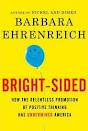
BRIGHT SIDED: HOW THE RELENTLESS PROMOTION OF POSITIVE THINKING HAS UNDERMINED AMERICA by Barbara Ehrenreich

I make it a policy not to read books with a colon in the middle of the title. The colon is a sure sign of a certain kind of heavily edited, heavily marketed non-fiction that makes me want to hurl. I particularly can’t bear the idea of the earnest publishing meeting where they tinkered with the title to get it ‘right.’

That said, for some reason I decided to read BRIGHT SIDED: HOW THE RELENTLESS PROMOTION OF POSITIVE THINKING HAS UNDERMINED AMERICA. A terrible title, but a rather good book.

The author is diagnosed with breast cancer, and immediately begins to feel that she is drowning in a sea of pink sugar. She is confounded by the relentless positivity that surrounds cancer, leaving no room for the obvious emotions: anger and grief. The idea that a positive mindset is a central part of conquering cancer is endless repeated, and Ehreneich, who in her youth acquired a Phd in cell biology, looks into this claim, and finds the science behind it very weak. The mere fact that it’s all nonsense does not deter the cancer industry one bit however, and so Ehrenreich begins an examination into the whole idea of positive thinking.

She studies its roots in nineteenth century religion, right up to its current status as a quasi-religious movement led by preachers called ‘motivational speakers.’ The fact that the universe is incomprehensible and probably meaningless is no obstacle to these ‘motivational speakers,’ whose message is that you can have anything you want if you just want it badly enough. This sounds like a hopeful message, but its dark underside is of course that if you don’t have what you want (if you lose your job, for example) it is entirely your own fault.

This idea obviously works very well for corporations. Unhappy employees do not need better working conditions, raises, or health insurance: they just need a better attitude! Thus a large percentage of the ‘positivity industry’ is funded by businesses, who buy the books and CDs for their unfortunate employees.

Perhaps the most interesting part of this book was the link Ehrenreich posits between ‘positive thinking’ and that pretty negative event, the global recession. I was surprised to learn that apparently, in the last decade or so, the majority of important CEOs made use of coaches, almost all of whom push the message of positive thinking: that is, imagining the best outcome, excluding negative people, manifesting success through the power of your thinking, and so forth. She includes many anecdotes of ‘negative people,’ that we might also call ‘realists’- fired Cassandras – who tried to tell CEOs that their mortgages where dodgy, their credit default swaps dangerous, their real estate bubble about to burst. They did not fit into the triumphant visions of men making $60million a year, and so were ignored, with disastrous results.

BRIGHT SIDED is an interesting book about how psychology can effect the real world, though not perhaps exactly in the way positive thinkers imagine.

Depressing Trivia! Rhonda Byrne, who wrote the positive thinking Bible THE SECRET, apparently said that the tsunami of 2006 could only happen to people ‘who are on the same frequency as the event.’ I’d like to put her on the same frequency as a fat slap.

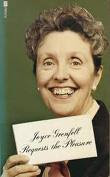
JOYCE GRENFELL REQUESTS THE PLEASURE by Joyce Grenfell

I am now reduced to reading celebrity memoir. And worse yet, a celebrity I have never even heard of: Joyce Grenfell. She was, it appears, famous in the 1950s as a monolguist. I can only say: monologuist?

Regular readers will understand from this that my Kindle has not yet arrived in Harare. I am thus reduced to reading whatever I can find on my parents’ bookshelves. This wouldn’t necessarily be a problem for someone else, as my parents own a lot of books, but unfortunately as my parents’child I have had an entire lifetime to read them. Thus, there is not much left. Thus, Joyce Grenfell.

In a move of striking originality, Grenfell begins her autobiography with her birth, which took place in a very nice part of London. Everything thereafter also seems to happen in a very nice part of London, unless it is happening in a very nice part of New York, or of Vancouver. Grenfell is born into a very wealthy family, and one of the more interesting aspects of this uninteresting book is an insight into the life of someone who does not ever need to work for a living. Her life appears to be a round of nannies and tea parties and dances. Family friends include theatre luminaries such as Noel Coward and Ivor Novello. Call me a cynic, but I’m going to go ahead and suggest that her success in show business may not have been down 100% to sheer talent and drive.

Here’s a taster, a comment on her father’s military service: “Like many men, he did not enjoy his time in the first world war.” Profound! And indicative of the book as a whole. Indeed, what I found most striking about this book was how very little Grenfell managed to share about her life, while writing a book about her life.

Even poor writers, when writing about themselves, usually manage to provide some insights; but this book is a miracle of emptiness. I wish I could give you some summary of her later life, and even reveal what after all a monologuist is, but I never got past adolescence, having to give up on Joyce Grenfell after the first hundred pages.

KING LEOPOLD’S GHOST by Adam Hochschild

I’ve reviewed KING LEOPOLD’S GHOST here for Africa Book Club. It’s the history of Leopold II’s brief period of control of what is to today the DRC, and makes for grim reading, recounting how the local people were in essence enslaved in order to produce huge amounts of rubber. Here’s a snippet, in case you don’t click through, to one rubber company employee’s account of his day:

It was most interesting, lying in the bush watching the natives quietly at their day’s work. Some women . . . were making banana flour by pounding up dried bananas. Men we could see building huts and engaged in other work, boys and girls running about, singing . . . I opened the game by shooting one chap through the chest. He fell like a stone . . . Immediately a volley was poured into the village.

The mind boggles. So appalling was the treatment of the people of the area that an outcry was raised in Europe. Leopold tries to silence this by sending a hand-picked Commission to ‘investigate.’ In a darkly comic turn of events, so horrified are Leopold’s toadies by what the local people tell them, that they actually return, to Leopold’s shock, an honest report!

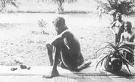
People often lazily group missionaries and businessmen together as all part and parcel of one monolithic colonial machine. This book most interestingly debunks this myth, highlighting the huge role the missionaries played in trying to protect local people from the business interests of Europe. The above, terribly sad picture, is taken by a mission lady on her verandah. I’m sorry to have to say that this gentleman is looking at the hand of his five year old daughter. Hands were cut off because soldiers needed to prove that they had not ‘wasted’ ammunition, and needed to prove they had actually killed one person for every bullet used.

Much more, obviously, in my full review here.

FEVER PITCH by Nick Hornby

Everybody has embarrassing hang-ups. Most people do not talk about these hang-ups, and certainly most people do not write books about them, so I feel Nick Hornby is to be applauded for the horrible honesty which he brings to his autobiographical book, FEVER PITCH, in which he discusses his relationship with football.

Nick Hornby likes football. He likes football a lot. More than he should really be admitting.

His obsession began when he was taken to a football match by his father, after his parents’ divorce, and this is where the book begins. Hornby theorizes that he may have become so involved with football at that time in an attempt to bond with his father, or to model masculine behaviour, now he lived only with women. This sounds to me like the sort of ‘explanation’ you get from books such as ROOTS OF PSYCHOLOGICAL PROBLEMS FOR DUMMIES, but whatever the reasons for his obsession, it came to dominate his life.

Hornby went to Cambridge, where he did not work very hard, and then found himself to be rather lost for a while, working at various times as an administrator, and as a teacher. After losing his first serious girlfriend, he struggled to maintain a relationship. He attended the matches of his team, Arsenal, religiously, and in many ways lived through their successes and failures, more than his own. He never, ever, misses a match, even when very ill, and is emotionally bound up in their successes and failures to an extent that is basically creepy. Thus for example, when Arsenal wins some big championship (I don’t know which, I’m sorry, I found the straight football bits boring) he actually begins to turn his own life around, eventually becoming a writer.

In addition to being rather sad, for Hornby clearly struggles very painfully to sort out his life, the book is in many ways very funny. Thus, discussing a man he sees who has died of a heart attack immediately after a match, he comments: ‘It worries me, the prospect of dying in mid-season like that,’ and continues, ‘The whole point about death, metaphorically speaking, is that it is almost bound to occur before the major trophies have been awarded.’

So a painfully honest, strangely intimate, and very funny book, about what it means to love something more than you should.

FLY FISHING FOR SHARKS by Andrew Alexander

This book is an honest account of a young man’s battle with obsessive-compulsive disorder and with depression.

Andrew Alexander grew up in Zimbabwe, and was educated at various times in South Africa, so the story is largely set in these two countries. His symptoms first appear in high school when he develops an obssessive need to check some aspects of his homework. Various other obsessions emerge, most especially around HIV, which makes him fear infection from even the most unlikely objects, and around driving, when he begins to fear that he has unknowingly hurt someone with his car.

The stress of moving to Cape Town for university triggers a major episode, and he is finally able to tell his family and get some psychiatric help. OCD is not an easy disease to treat, and he does not seem to get the very best of medical assistance. He eventually feels well enough to move to the UK, but the stress of London is too much for him and triggers another episode. He eventually develops depression, along with his OCD, and attempts suicide twice.

The author’s breakdown occurs within the context of the breakdown of Zimbabwe, and thus the book is also an interesting window into a certain historical and political moment. As with most middle class Zimbabweans of his generation he has lived in at least three countries, and thus the book has an easy cosmopolitanism. It is also, despite its serious subject matter, often very funny. One feels very intimate with the author, who clearly has thought deeply about himself and his world, and is at pains to share his knowledge with you as honestly as he can. The path to self-knowledge is a long and painful one, whatever your mental health status, and Alexander has clearly gone a good deal further down it than most.

IN THE MIDST OF LIFE by Jennifer Worth

This is a maudlin and poorly written book that makes an unexpectedly good point.

The book is intended to question the way western culture deals with imminent death. The author begins with an account of her grandfather’s death, which happened gently, and at home, and contrasts this with the deaths she frequently saw as a nurse. It is very common apparently for elderly people to end their lives in a great deal of pain, over an extended period, because doctors feel driven by a fear of litigation to extend life, even if only for a few days, by very painful, invasive procedures.

She gives many examples of elderly or terminally ill persons forced through many weeks or even months of great pain because their carers felt unable to simply let the person go gently. Unfortunately, we do not need many examples to understand her case; one or two would have been quite sufficient. As it is, the book degenerates into a rather sentimental, even morbid, succession of stories of people dying in horrible conditions. I’m not going to say I didn’t spend some of the book in tears, but this owes less to the quality of the writing than to the quality of this reader: I am a giant wimp.

I wish the book had involved more examination into how this state of affairs had developed, because where she briefly looks at this it becomes much more interesting. For example, there is some discussion of the fact that in long term care facilities, it is normal for dementia patients to have a feeding tube inserted into their stomachs. You might think this is because they cannot eat, but you’d be wrong. The tubes are inserted because it saves carers fifteen minutes for each patient – they do not have to spoon their food into their mouths, but can just pour it down the tube.

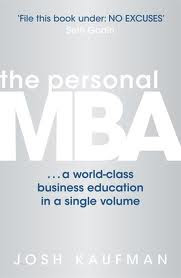
PERSONAL MBA by Josh Kaufman

This is an unusual entry for this blog. It is, according to the author, a distillation of the most important ideas to be learnt in an MBA.

The author clearly has a pretty big chip on his shoulder about MBA programmes, and in particular about their price. He froths at the mouth for some time in the introduction about how much debt you go into to attend one, and how little you learn. I suspect he may be right about this, though it seems pretty obvious to me that most people do not go to business school to learn about business so much as to make contacts and to have a prestigious institution’s name on their CV. And these are very valuable assets, probably much more important than actually knowing what you are doing.

So this book focuses on the secondary goal, which is actually learning about business. I found it a very good basic introduction to the main concepts in business: profits, costs, overheads, etc. It is very clearly aimed at those starting a small business, and has many excellent recommendations, including explaining how to predict when a business will begin to make a return on investment, and how to start from the most basic beginnings.

Fittingly, for a book about reading, I also learn how to appropriately commodify books and magazines. Apparently, while there are many value forms (production, leasing, etc), reading matter may be classified as ‘audience aggregators,’ that have value primarily because the attention of the audience you gain can be sold on at a profit. Take that, Proust, Shakespeare, et al!

It really makes you think. For example, it made me think: if only Herman Melville had had a copy of PERSONAL MBA while he was dying in poverty! How different the history of nineteenth century American letters!

LETTERS BETWEEN A FATHER AND SON by V.S Naipaul

I don’t know much about VS Naipaul, beyond his A HOUSE FOR MR BISWAS, which is a wonderful novel. It’s set in Trinidad, and the book’s so good that ridiculously, I now feel whenever I hear about Trinidad that I have some kind of personal relationship with it.

LETTERS BETWEEN A FATHER AND SON is made up of correspondence between VS Naipaul, his father and his sister, written during the period after he left Trinidad for Oxford University. There is much discussion of the prosaic – money movements, sending socks, and so forth; but also much discussion about writing – the father has literary ambitions, and encourages his son endlessly; and many heart-to-hearts, especially at the end when ‘Pa’ dies unexpectedly.

There was a lot I could relate to in these letters. I also left a developing country for a developed one, and the attempt to reconcile these worlds, the apologies for not writing, the death of pets and passage of time were really quite touching.

I actually felt quite sorry for VS Naipaul, or Vidia, as his family call him. He seemed to me to struggling with some very serious mental colonisation. For example, hilariously, he is all ready for the beauty of an English autumn! Clearly, he has done a lot of reading Keats (here for his Ode on that season), and not a whole lot of waiting on an open platform for the 4.52 to Charing Cross.

He is entirely convinced that in escaping Trinidad he has made a great escape, from a place which is self-evidently less interesting and less worthy of notice than wonderful, wonderful England. And yet, at the same time, what is he constantly writing fiction about? That terrible, boring place, Trinidad. And he doesn’t seem to see any contradiction there.

A very sad strand in these letters is the desire of Vidia’s father to become an author. Vidia is very close to his father, and we learn a lot about this. Pa is hampered by a lack of time, as he has to work constantly to support his many children. (VS does not come off at all well in this respect, as he writes very pointedly to his mother after his father’s death, telling her to tell his younger sister to not to have too many children! As if his poor mother was having them all by herself, asexually, like an amoeba)

A HOUSE FOR MR BISWAS is in fact apparently a version of the story of his father’s life, and I find it rather sad that that should be Naipaul’s masterpiece in the end. Immediately after Pa’s death, he writes to his sister, saying:

In a way I had always looked upon my life as a continuation of his – a continuation which, I hoped, would also be a fulfillment. It still is; but I have to abandon the idea of growing older in Pa’s company; and I have to get the strength to stand alone. I only wish I have half Pa’s bravery and fortitude.

Indeed it seems that for many A HOUSE FOR MR BISWAS is the book on which his reputation rests. IN A FREE STATE I believe won the Booker (but let’s face it, that was also won by the wretched FINKLER QUESTION), and I don’t believe we need to know any more about the literary quality of that book than that large sections of it are set in ‘an unnamed African country.’ Because obviously all of Africa is pretty much the same.

Mr Naipaul, take a tip from Mr Marley: Emancipate yourself from mental slavery. None but ourselves can free our minds!

IT’S OUR TURN TO EAT by Michela Wrong

A friend kindly lent me this as I am moving to Kenya. It tells the true (as far as that’s possible) story of one John Githongo, who famously decided to blow the whistle on corruption in the Kenyan government.

Kenya used to be run by Daniel arap Moi, who presided over a fairly corrupt administration. (A contemporary joke was: l’etat, c’est moi). Eventually, he was voted out of power (and actually went – take a tip, ZANU), and replaced with Mwai Kibaki. Kibaki promised an end to the corruption, and hired John Githongo to head a special anti-graft unit. There was much hope throughout Kenya that a new dawn was genuinely on the horizon.

Githongo was a well-educated young man, a journalist who had worked for Transparency International, and he set to work with a will, believing that Kenya really could change. He uncovered a massive government scam, which became known as the Anglo-Leasing (or Anglo-Fleecing) scandal. He slowly realized however that neither President Kibaki, whom he had believed in so whole-heartedly, nor any of his ministers wanted the scandal uncovered, primarily because they were its’ main beneficiaries.

He taped incriminating conversations, and kept incriminating documents, and then in fear of his life fled to the UK, where he arrived on the doorstep of a journalist he barely knew asking for shelter. (Thus Michela Wrong our author enters the story). He eventually released his information, and while a huge scandal did unfold, very few heads rolled.

Wrong ties this to the growth of ethnic divisions in Kenya, pointing out that Moi was a Kalenjin, and his regime mainly assisted them, while the Kibaki regime, though it did preside over a growing economy, was perceived to mainly assist his people, the Kikuyu. John Githongo’s special crime was thought to lie particuarly in the fact that he was a Kikuyu, and thus ‘betrayed’ his own people. The book takes us up through the explosion of ethnic tensions that marked the last elections.

So, in some respects a very depressing story. Ms Wrong clearly finds it so, making much of how wasteful aid is, what a hopeless case most of Africa is, etc etc. Personally, I didn’t find it to be that way. The main point I think is that John Githongo did stand. And there were those who stood with him. As we see in North Africa at the moment (viva Benghazi, viva!) there has been an old way of doing things,and Africa is currently run by old people, familiar with these old ways. But I have hope: a new generation is coming. Perhaps it is just that it is a sunny morning, but look – Kibakis is one of these geriatrics, born 1931, Mugabe, 1924, Gbagbo 1945 – while John and all those with him are young.

Ms Wrong writes with a lovely clear lucid journalist’s voice, and has a lovely turn of phrase. She did get me down with her old-Africa-hand despair, and by her typical white British way of dismissing white Africans. But whatever, it was an interesting and informative book.

I only arrived in Nairobi yesterday, and on the way from the airport I already noticed one of the small businesses she mentioned. A good introduction.