Just a re-read on a sleepless night
Author: sarahwp
JOE CINQUE’S CONSOLATION by Helen Garner
Apparently I’m on a real Helen-Garner-true-crime kick. This one is another account of a real trial. It is about a university student who hosts a dinner party to celebrate the fact that she is going to kill herself and her boyfriend. The boyfriend is not aware that this is a farewell party, but – get this – most of the other people there are (?!?). She goes on to kill the boyfriend but, in true cowardly form, not herself.
It is really a jaw-droppingly weird story. The girlfriend seems to be pretty sane-ish, but struggling with self-obsession. The judge believes she has some kind of personality disorder, which I could kind of believe, except for that part where she doesn’t even try killing herself, but stands over her boyfriend while he dies slowly over the whole weekend (heroin, rohypnol). She only get four years. Her best friend 100% knew what she was planning, is 100% sane, and gets off scot free. It’s wild. Only of their friends, a 21 year old, gets even close to calling the police, but is shamed into thinking they are not serious. This was in many ways the most interesting part of the story, how none of these students had the courage to follow their gut.
This was an earlier piece of reportage than THIS HOUSE OF GRIEF, and I did not like it as much. It was, for my taste at least, a little bit over-written and overwrought. It was still interesting though, and I don’t doubt that if she has written more of these I will read them.
GHOSTROOTS by Pemi Aguda
Here is speculative horror fiction from Nigeria. Unfortunately, it’s short stories, which I always struggle to get into. However they were skilful stories. I liked, for example, the description of a woman “who is stroking her blond wig as if it were a living thing, a pet that needs comfort”
I also really enjoyed the way she evoked contemporary Nigeria, very dense and real. This I thought was an interesting part, about a girl whose parents will not tell her anything about her grandparents:
“But what do Nigerian parents tell their children about their own parents? Especially the Pentecostal Christians? Nothing. If you took a poll of your friends, three out of five would be similarly ignorant of these histories of parents who moved from somewhere to Lagos, left behind religions and curses and distant cousins and grimy pasts”
That first generation who moves to town, who goes from nine kids to two, in any country, is an interesting one.
Nigeria is generally kind of an extreme place, and it makes for a fun setting for speculative fiction. One charter fears she is the reincarnation of her evil grandmother, and she asks her “coworkers if they believe in reincarnation. Five of them believe. Two of them claim to have corroborative stories.” One of them feels she is a reincarnation – of Beyonce.
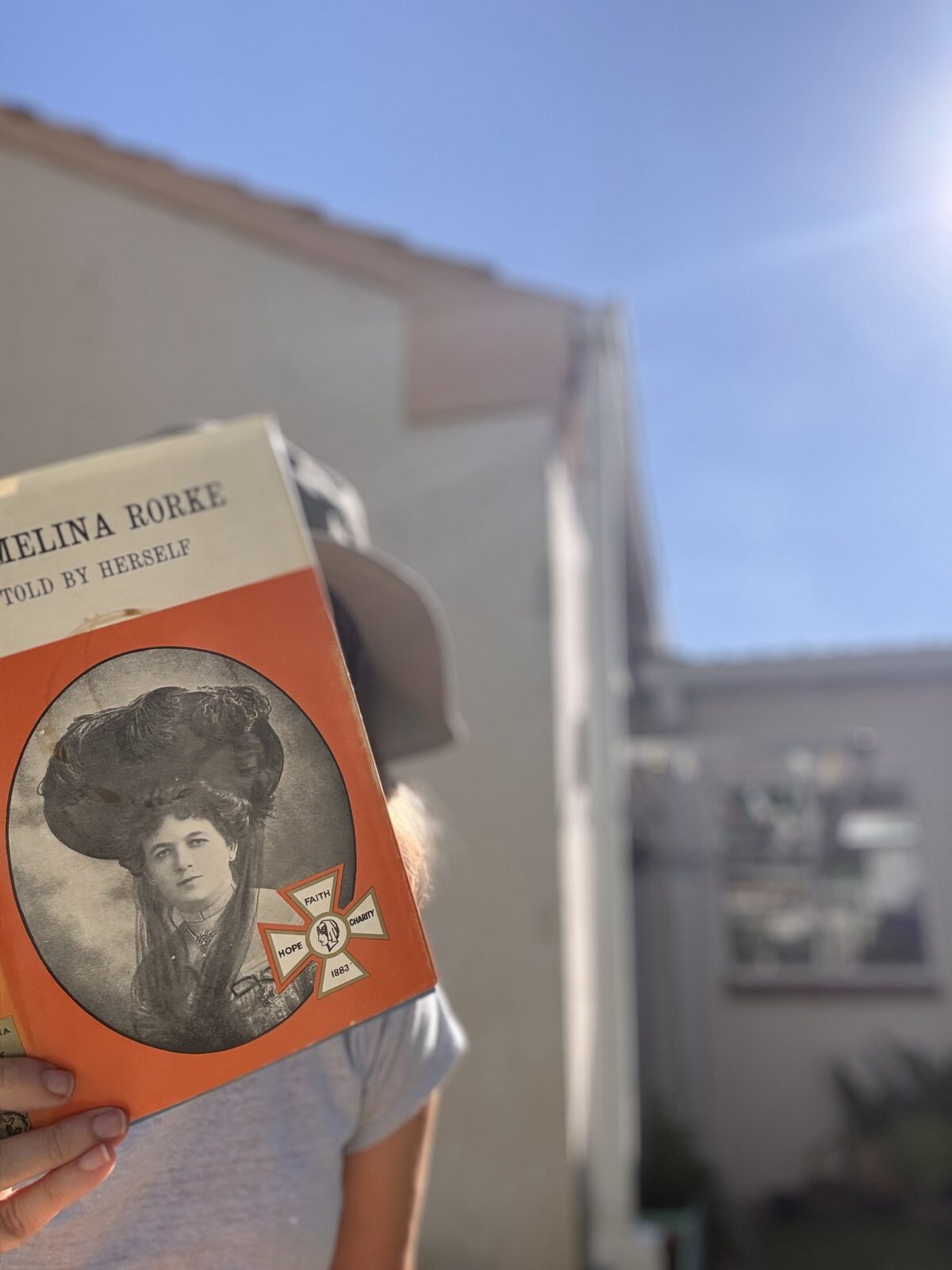
THIS HOUSE OF GRIEF by Helen Garner
I chose this book on impulse because Amazon recommended it to me. I had just read a book by the same aurhor, her first, which is why the algorithm though I might like it. That one was a deeply personal memoir of her life in a commune with her junkie boyfriend. This one is wildly different, being a straightforward piece of courtroom reportage.
It was pretty interesting. It tells the real life trial of an Australian man who drove his three children into a dam. They were drowned, but he survived. He claimed he had a coughing fit. His ex, and his family, all testified in his defense, saying he loved his children and would never have killed them. He was also however in the middle of an apparently amicable divorce – his wife was leaving him for the contractor who was doing up their house – and it became increasingly clear over the course of the trial that this mild-manner man in this polite divorce had actually murdered the children to get his revenge.
The story in itself was pretty interesting, but what really elevated it was Garner’s clear, lucid writing, and her close observation of how ‘justice’ actually gets served. The part that I can’t get over is that these poor kids were found unbuckled. It looks like the five year old unbuckled the two year old’s car seat, and the eight year old actually managed to get the window down; but just not quite in time to escape.
DOOMSDAY BOOK by Connie Willis
Prepare yourself to hear that there is an author who has won more major SF awards than Philip K. Dick, Arthur C. Clark and Isaac Asimov COMBINED, despite having written fewer books than any of them. Yep. It’s this Connie Willis. I have never heard of her and will be amazed if you have. In the introduction, they say that she has ‘one thing’ that makes her different from those other writers, and that one thing is her ‘ability to make you care,’ and I would say, yes, I hope so, because my assumption is that is the existence of a ‘vagina.’ However let us not get bogged down in all that.
This book raises the interesting question of what would happen to the careers of historians if time travel were invented. It tells of an ambitious young historian that volunteers to go back to what they consider one of the most dangerous centuries, the 14th. And then boom, suddenly it’s a novel SPOILER ALERT of the black death. It’s just a straight up story of what it must have been like to be there then. Interestingly, they called it ‘the blue sickness.’ I had never considered how awful it must have been to go through the plague without even paracetamol or disinfectant. It’s stomach churningly terrible.
The people in the future (which looks a lot like the 1950s) try and rescue the young historian, but they can’t get back into the past initially, and what I was struck by was how incredibly inefficient phoning people used to be. They spend absolute ages waiting by the phone and taking messages and trying to catch people at home. It’s guess I had underestimated how much the group chat alone has improved human efficiency.
ALL THE WORST HUMANS by Phil Elwood
Here is a memoir about working at the sketchiest end of what is already a sketchy industry, i.e, PR. The author has spent a career shilling for dictators. He was a big debater in high school, and it shows. He thinks he is just so terribly clever. The book was kind of interesting e.g., I learnt the horrifying fact that there are 300K publicists vs only 40K journalists in the US, and that a PR firm exists who took $18.8M from Saudia Arabia to try and spin the dismemberment of Jamal Khashoggi. But it was also kind of boring, because its just a litany of ways he tried to spin stuff that he thinks is very clever. I’m not sure they are that clever, I just think the list of people willing to do this stuff is not very long so the competition is not very steep.
One part I did find interesting was the weekend he spent in Vegas trying to make sure that Gaddafi’s son, Muatsaem, did not do anything newsworthy. It was wild to see how completely unhingedly entitled this guy was, down to beating hotel maids for trying to clean. And how wildly unhappy. I also enjoyed his visit to Nigeria, where he goes to try and massage the kidnapping of the Chibok girls. Try this:
” “The whole world just found out where Nigeria is on a map because of these kidnappings,” I say. “Everyone is watching you. You need to do something about this problem.”
“Problem?” an official asks.”
Everything about this is hilarious. As if Nigeria was unknown to the world because this PR guy didn’t know about it. And I just love the profoundly Nigerian reply, as if a few hundred more kidnappings is not that big deal, which, to be fair, it is not, in the larger scheme of the security situation in the North. Also of interest to me was that he stayed in the Abuja Hilton, a place I have myself stayed for many months, and also noted the oil men, prostitutes, etc. Strangely he was very stressed out by it. I guess if you’ve never even heard of Nigeria before the Abuja Hilton is quite an introduction.
I also learnt something we should all recall, which is that in PR you should never state a negative. Apparently the first phrase that Americans think of when they think of Richard Nixon is ‘I am not a crook,’ which is something he said. This is a classic example of accepting the wrong framing. You should always say ‘I am a good man,’ or ‘I love America’ and etc.
One last thing, the writing is often sharp and funny. He has a friend who is very Republican. Here’s the friend explaining:
“Nobody who doesn’t have a generator and two years’ worth of food in their garage outflanks me on the right.” Says the author: “I describe him as ‘authoritarian-curious’”
I love that phrase! Perfectly describes these decadent rich people who don’t understand what democracy has given them.
STARTER FOR TEN by David Nicholls
I really enjoyed this author’s new book, YOU ARE HERE, so thought I would give his first one a try. He’s a skilled guy, but for me it was a bit meh. This is partly I guess because he has grown as a writer, which is interesting to see. This one, like YOU ARE HERE, is lightly comic, but it has much less heart.
Perhaps also I was slightly put off by the subject matter, being an account of an awkward young man’s first year at university. Not that this is not good subject matter, but let’s be real, it’s been done a lot. Many authors historically have been men, and awkward men at that, so they’ve had a lot to tell us about that experience. So the bar is high. Side bar, I note I have also read many accounts of men losing their virginity to prostitutes. I have yet to read one by the prostitute. Any suggestions?
THE FRIENDZONE by Abby Jimenez
Here is a genre romcom. I just read a genre rocmcom by the same author two days ago, as I am on a long beach vacation, and what was weird was this: it was basically the same plot – couple are blissfully in love, but girl has an illness that means she must break up with him instead of talking to him (?). Like I appreciate that genre is genre, but damn, it was literally the same story. However I was three beers in by this stage and the sun was hot.
LIFE’S TOO SHORT by Abby Jimenez
Here is a genre romcom I read on the beach in an afternoon. It was a genre romcom, so what can I tell you? Boy meets girl, it ends happily, this is what we are looking for in genre fiction. However, one interesting part was that the girl believes she has a terminal illness, and will likely be dead in two years. She therefore lives her life as fully as she can, always getting the good wine, always doing the trips, etc, and it really made me think how funny it is that because we have (maybe) fifty years instead of two, we think we should not get the good wine. It’s not as if fifty years is so very long.
MARTIN DRESSLER by Steven Millhauser
Here is a Pulitzer-winning book that I despised. This just goes to show how incredibly personal taste in fiction is, because it is not easy to win the Pulitzer, and objectively speaking I can see that this is good writing, but god, I just found it irritating. It has a lot of lists. I don’t think there is any object in nineteenth century New York he does not list. I guess this could be called dense world building. I found it annoying. It tells about a young man who has a drive for success and gets rich off building hotels while mysteriously marrying a woman who is obviously unsuited to him. I mean: why? I could not get it. I’d also whacked my head hard on a car door and was icing it for much of the reading so perhaps that came into it.