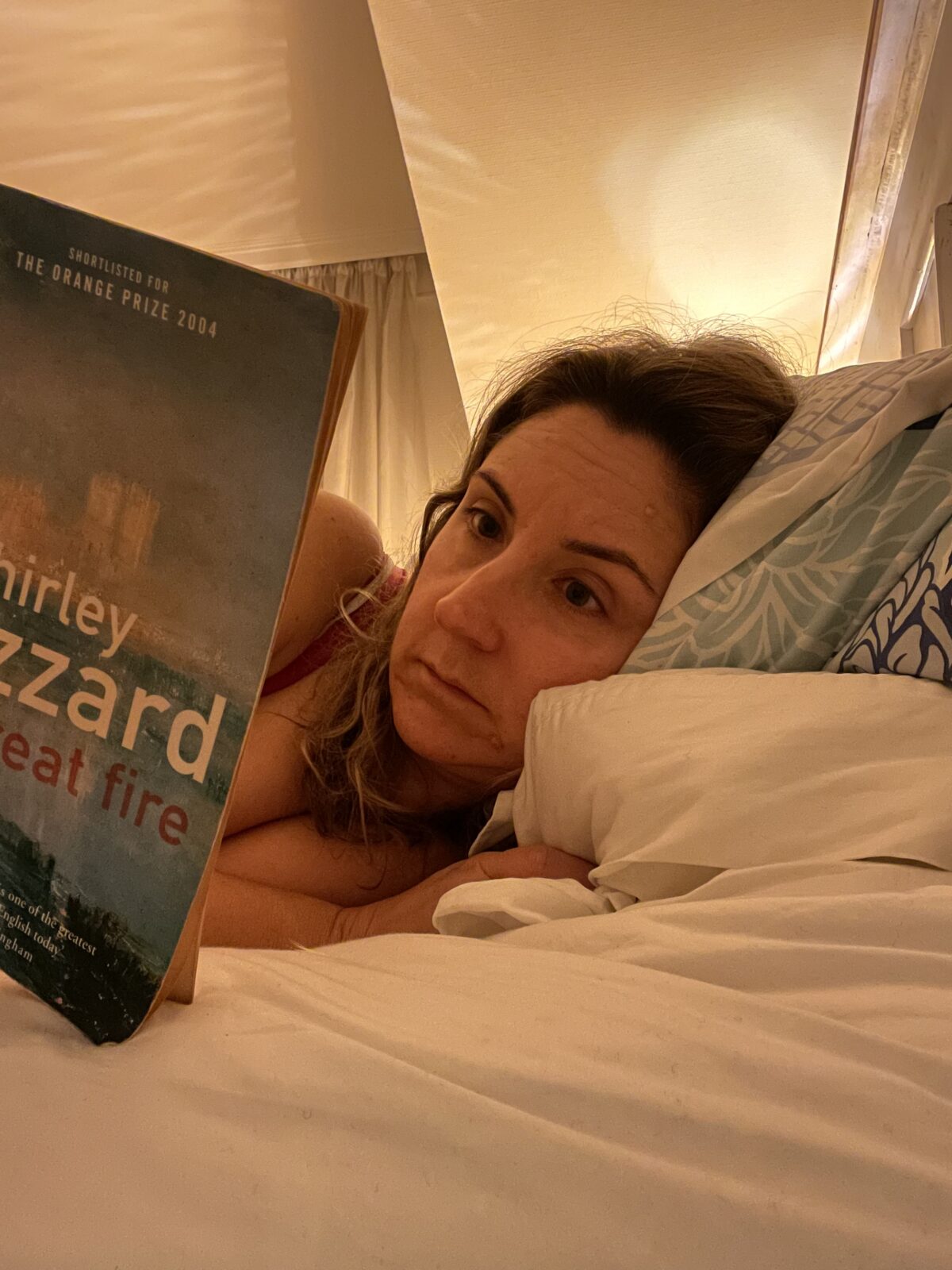
THE GREAT FIRE by Shirley Hazzard

I nearly gave up on this book multiple times. I found the style kind of hard to read, and the dialogue fake-y. And then at some point I sort of clicked into it, and it started to fly by. I worry that the older you get, the less wiling you are to enter into things on their terms, rather than your own. Anyway, I managed it on this one.

The main interest of this story was the setting, which was post WWII Japan/China/Australia. It drips with loss and longing. This is not to say the plot was not interesting: barring some side points about polio and Hiroshima, the main story is about a 16 year old girl and a 32 year old war man who fall madly in love. The girl’s parents, totally understandably, think this is not a good plan, and move her to New Zealand. He eventually follows her there and the novel ends with them having sex.

I did wonder why the girl’s parents were painted as such villains, and some Googling reveals that this story is pretty close to Hazzard’s own life. She too fell in love with a much older man right after the second World War, and was also removed from him. However, in her real life, they eventually broke up by letter, and never actually hooked up. This novel was written some forty years later, after she had gone to visit this guy on his Welsh farm. I guess there is a lot of comfort in fixing history, even if only in the imagination.

THE ANIMALS IN THAT COUNTRY by Laura Jean McKay

This book has an amazing sounding premise:

. . . a strange pandemic begins sweeping the country, its chief symptom that its victims begin to understand the language of animals. Many infected people lose their minds . . .

No one doesn’t wonder what their cat thinks of them, and I loved the idea of finding out. Unfortunately I sort of struggled with this book. What the animals have is say is stuff like this:

My front end

takes the food

quality.

Muzzle

for the Queen

(Yesterday).

I’m not sure I’m much the wiser. More than that though, I found the protagonist almost unbearably annoying. She lets her obviously infected son into their compound, and doesn’t feel any guilt about it. She loves her granddaughter, but in a creepily sentimental way. She contracts everyone’s names (‘Ange’ for Angela, etc). She is often described as ‘gulping’ her drinks. These are things I don’t like. It’s not super defensible, but okay. I maybe could have handled it, but then she rear-ends a truck full of factory farmed pigs. I couldn’t face hearing what they think of us, so I quit.

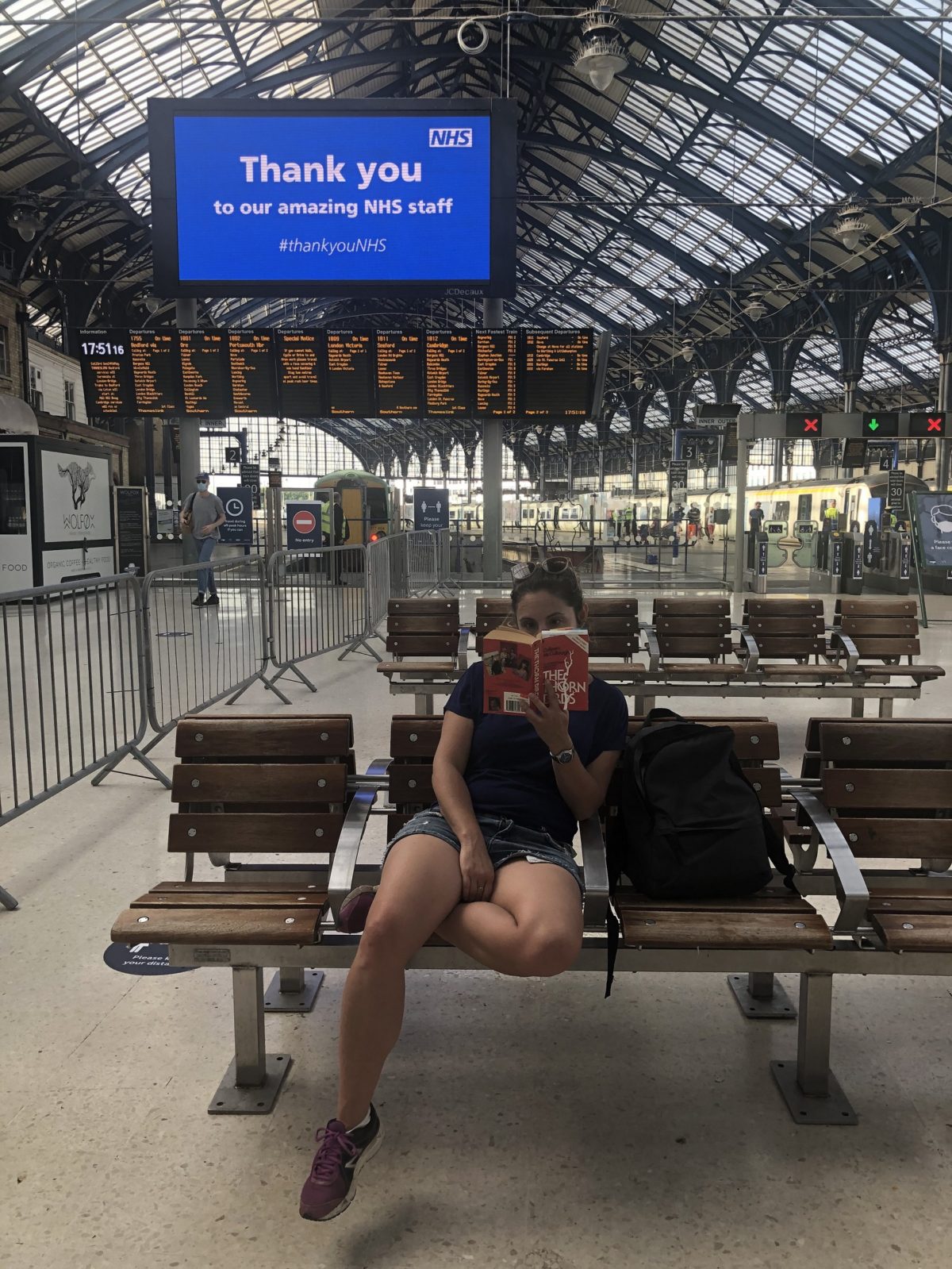
THE THORNBIRDS by Colleen McCullough

Colleen McCollough was working as a medical researcher when she found out she was making less than male colleagues.  Determined to make more, she turned to art.  Incredibly, this gambit worked.  This epic of an Australian family was a bestseller and spawned a very popular mini-series. (“Instant vomit,” according to McCollough).

While I can see many issues with this book, including extreme cheese and really stilted dialogue, I have to go ahead and confess: I enjoyed it.   Partly, I enjoyed the plot, with this much older priest falling in love with this young girl.  But mostly I enjoyed the setting.  For example, did you know that if you can shear sheep fast, (three hundred a day) you are a ‘dreadnought’ and can make as much money from betting how fast you can go as from actually shearing.  Also did you know that in shearing sheds:

At each’s man’s stand . . . was a circle of flooring much lighter in color than the rest, the spot where fifty years of shearers had stood dripping their bleaching seat into the wood of the board

Despite this being in many ways an old-fashioned book, McCullough certainly is unafraid to advance a specifically female view of the world.  She has a lot to say about domestic drudgery, and about how no one actually loves any of their kids after the fifth, and about how the men in rural Australia think they are good kissers only because the women are good liars. 

That instant vomit thing tips you off. This lady was a character.  She was convinced all critics knew ‘in their hearts’ she was just smarter and better than them.  She wrote 30,000 words a day, and virtually ‘never made mistakes’ because she had perfect spelling and great grammar.  And she died a millionaire many times over, so take that, other medical researchers

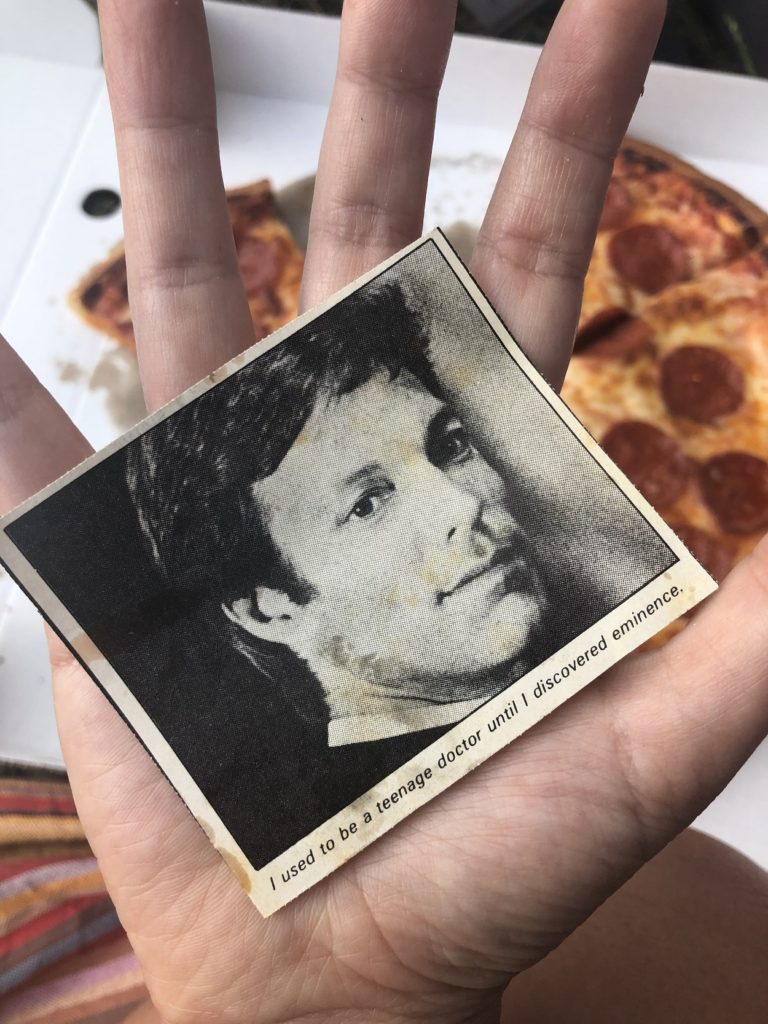
Let me note that I read this in my absolute favourite format, which is a very elderly second hand paperback, with browned pages, and as an amazing bonus it even had a weird newspaper clipping as a bookmark.  Enjoy the mysterious caption especially: “I used to be a teenage doctor until I discovered eminence.”