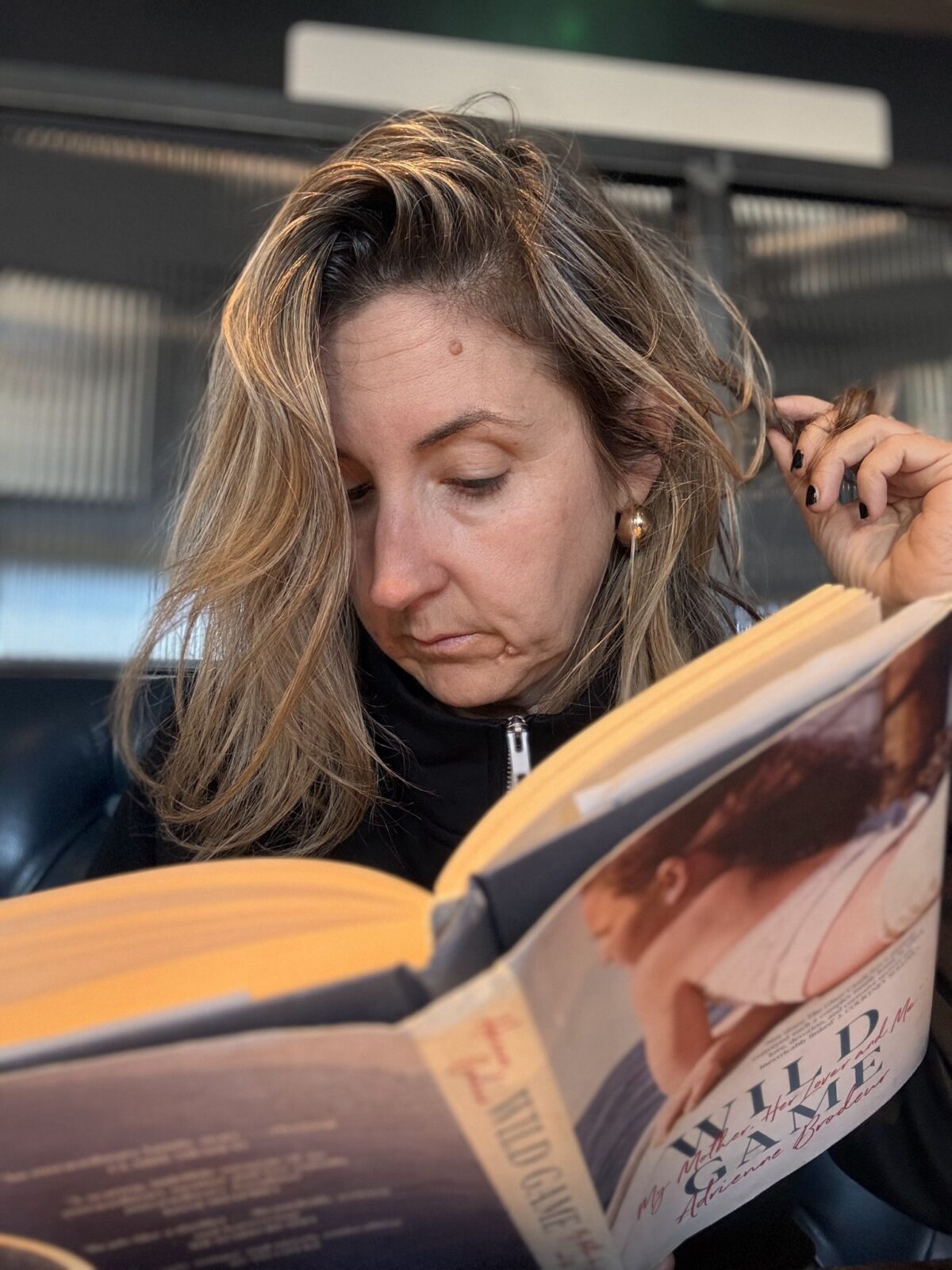
THE SHELTERING DESERT by Henno Martin

I always like to read a book from the country I’m visiting, so here is a piece of non-fiction telling about the author’s two years he spent hiding in the Namib desert 1940-1941.  He went with a friend/lover(?).  He claims the goal was to avoid internment by the Namibian authorities as an enemy national (as they were Germans) but I have the strong suspicion they also thought it would be kind of baller.

They drive out in a truck, and have some supplies, so at the beginning it was easy.  They did have to give up their rifles to the police when war began, and came to regret this a lot, as apparently it is very difficult to shoot something at a distance with a handgun.  There first Christmas was pretty good, but here is their second:

“We allowed ourselves a double portion of maize, and we made it tastier with a teaspoonful of sugar that we managed to shake out of the fabric of our long-empty sugar sack. And then we heated all our empty dripping tins and collected about two teaspoonfuls of fat. It was rancid, but to us, who had eaten nothing but fatless zebra meat for a couple of weeks, it tasted wonderful.”

And he’s underselling the zebra part. One time they are so hungry that after they manage to shoot it they don’t even wait to cook it and just eat some raw. 

They do have a wireless, and so are able to listen to classical music, and to the progress of this “lunatic war,’ as he called it.  Apparently they had left Germany for Namibia in the late thirties, even before war broke out, as they could see it coming and wanted no part of it. I find this cool. Talk about just opting out, even if it ends in raw zebra.

Some of the book I skipped, I have to admit, as it was long discussions between him and his friend on various philosophical topics. I recall this from another African book, LONG WALK TO FREEDOM.  Clearly desert and prison are not too different and you don’t have much to do other than philosophize.

Eventually his friend gets beri-beri, so they have to go and hand themselves in.  They are fined but not interned (after all that!).  He ends the book with a rather sad coda, telling how his friend died in a car accident.  Wikipedia tells me he was an alcoholic who suffered from depression who likely drove himself off a bridge intentionally.  Also very sadly, he reflects on how much less wildlife there already is, ten years later.  He notes: “no man will ever again see a head of four thousand springboks in the neighbourhood’.  I had wondered about this myself; driving through the Namib I did not see anything like this.   It’s sad how an apparently wild environment is already so degraded by us.  Of course if we enter WW3, as we seem on course to do, maybe they will have a rebound

THE TEN YEAR AFFAIR by Erin Somers

I really enjoyed this one, as have many others – it is on many ‘Book Of They Year’ lists.  It tells about a woman living in the suburbs outside New York who has an affair, first imaginary, and then real.  It’s generally very funny, but also rather sad.  Saying ‘it’s about an affair,’ might make you think it’s some kind of tragic love story, but in fact it’s more about boredom and mortality. 

There is a lot of angst about having decided to leave the city for upstate New York: “People back in Brooklyn thought you were Henry David Thoreau, but then they came to visit and saw that you lived in a vinyl-siding house.  It was only rustic in that you could not get good Thai food.”

There’s also career angst.  The main character, Cora, has a dull job, having downgraded her ambition around network television after an internship showed her how much work it was:

“To do something you believed in or enjoyed, you had to throw yourself at it like Eliot or Jules. Cora’s mom had envisioned her as a no-nonsense lady, like Barbara Walters or Gayle King. It had hurt her to learn that Cora was, in fact, nonsense.”

And then comes the affair partner, who when she first sees him she notes: “He wore socks printed with fir trees and a chambray shirt.  His jeans were only mildly terrible.”

This jeans comment really makes me lol. This is indeed the low bar straight women accept from straight men.  So much of the story is about the imaginary affair that when the real affair happens, it is inevitably something of a let down.  I really liked this, as a commentary on the actual affair:  “The shabbiness of real life.  You had to admire its consistency”

It is kind of interesting how the affair does not seem to affect her love for her husband. It’s more her working through her own feelings of emptiness.  I note again, just like SO YOUNG, SO OLD, that friendships are once again presented as difficult and superficial.  I don’t know if that’s just what happens to youwhen you move to the subrubs, but I’m not about ot find out. 

Once the affair is real, the imaginary life becomes one where she has a third child with her husband. I like this line, from an acquaintance, when she decided not to have the child partly because she fears what it will do to her body:

“Your body is going to a grave, said the woman.  To a landfill.  It’s a single-use item.  You might as well wreck it.” 

A VIEW OF THE HARBOUR by Elizabeth Taylor

I love Elizabeth Taylor’s books usually.  MRS PALFREY AT THE CLAREMONT was one of my favourite books of recent years.   So I was surprised to find that this one just sucked.  I need to google it and find out: was it maybe her first book? Or her last?  Or perhaps I just didn’t like the subject matter? It was a rather bleak story about a community in a fading seaside town.  Lots of moaning about how the ‘funfair doesn’t come anymore’.  I mean JUST LEAVE THEN GOOD GOD.  Other people be parading half-way round the world I think you can get off your asses and go to Milton Keyes.  The other annoyance was that one major strand was about a couple having a very dramatic affair.  JUST GET DIVORCED FOR GOD’S SAKE IF YOU’RE THAT UNHAPPY. 

THE CLAW by Cynthia Stockley

Here is some pulp fiction from 1890s Africa! This is not a sentence you write every day. It is by Cynthia Stockley, whose VIRGINIA AMONG THE RHODESIANS I just read. I’d never heard of her, but she was a very successful Zimbabwean novelist of the nineteenth century, whose books got made into many silent films.

The story is straight up romantic melodrama, but I enjoyed it in anyway.  Partly this is because is strong on plot, as melodrama must be.  Partly because it is funny, which melodrama usually is not.  At one point she is telling us about the very un-funny plan the white men are making to go and destroy Lobengula’s kraal.  But here’s the elderly doctor, refusing to go: “He was not looking for any Lobengulas, he said. He had not lost any Matabele impis, so why should he go and search for them?”

But mostly I enjoyed it for a rare chance to learn about life in Zimbabwe in this period, by someone who was there.  It all goes on: using anthills as ovens; marching once boots run out with your feet stuffed into wallets; and etc.  I was struck by how the white Zimbabwean culture of that time seems pretty continuous with this one.  There is still today a similar frontier spirit, I think, and a love of country. There are lots of sections dedicated to the beauty of the veldt, which if you are sad can make you happy, and if you are happy can make you sad.   The ‘claw’ of the title is the claw of Africa, that would not let the main character (an American girl) leave, because she loved the place too much. Also very Zimbawean is that she never uses the term home (for either America or Zimbabwe) without quote marks around it. For some reason that really struck me. 

MAURICE AND MARALYN by Sophie Elmhirst

Called A MARRIAGE AT SEA in the US, not sure why in the UK it has this name, this is the true story of a couple who spent 117 days in a lifeboat after their sail boat went down.

Lots of SPOILERS.  The husband was a pretty rigid and eccentric character, and was fairly lonely till his late thirties, where he met his wife, who was ten years younger.  They did not come from money and saved hard to have the chance to go on an epic sailing trip.  They made it across the Atlantic okay, but in the Pacific, a few days away from the Galapagos, a dying whale sank their ship.  They scrambled onto the lifeboat with what they could, and Maralyn (the wife) took a photo of the tip of its sail as it went down.

Then began 117 days. They saw 8 ships, none of who saw them, before they were rescued. They got through their food in 20 days, and then started on what they could catch.  They fished with safety pins, and caught turtles and sharks (!) with their bare hands.  They sometimes caught birds too, and ate not just the birds but the fish the birds vomited back up.  They were thirsty enough to think fish eyes were delicious water source.  Hardest of all was the despair.  Maurice was willing to give up, but Maralyn insisted they would live.  Towards the end the raft started deflating, so they had to pump it back up EVERY HALF HOUR.  They were near death (and I’m talking pressure sores that reached to the bone) when a South Korean ship rescued them. 

They are (get this) eager to get back on the water again and use the money they make from selling their story to buy another boat and sail on.  Eventually though they run out of money and are forced to go home.  I felt bad for them that YouTube was not invented yet.  They would have raked it in.  They are less happy on land, but still extraordinarily happy together, until Maralyn dies at 61.  Maurice is bereft. 

Bizarrely, the author begins the ending of the book with this:

“There are many ways to take the measure of a life.  In the linear version, Maurice’s life had a hard beginning, a dramatic middle, an isolated end”

Yikes.  Imagine thinking it’s your business to take the measure of a life.  What does that even mean?  Luckily she takes a steer from Maurice, from his self-published autobiography (which, charmingly, only begins on the day he meets Maralyn), where he says:

“Although I am wary of accepted truths, I believe in all human beings there is a desire to love and be loved, to experience the full fierceness of human emotion, and to make it a measure of the success of one’s life.”

So she concludes with the idea that you could “measure (a life’s) success by the extent to which you have loved and been loved.  On that count, his life had been a triumph”

VIRGINIA OF THE RHODESIANS by Cynthia Stockley

I read a piece of non-fiction called SALLY IN RHODESIA by Sheila MacDonald, set in 1910, which mentioned how Rhodesian women were considered ‘fast’ because of the novel VIRGINIA OF THE RHODESIANS. I was naturally agog and have been looking for this book for two years. I finally found an amazing edition on Ebay. It’s so old I cannot figure out its year, but it’s some time 1903-1911

It tells the story of a young woman living in Rhodesia in the late 1890s, and is (I assume) based on the real experiences of the author, who was a young woman living in Rhodesia in the late 1890s. Especially dramatic is the period she spends barricaded into the town that is now Mutare in 1896. I know this as the period of the first Chimurenga (i.e., uprising against the colonialists), and assumed they were all terrified/traumitized/etc. Apparently no: they were mostly drinking gin, cheating on their husbands, and gossiping?!?

On reflection though, I can’t deny this does sound pretty Zimbabwean, especially when it comes to the gin and the gossiping. Every day she says ‘brings five fresh scandals,’ and this sounds pretty close to Harare today. The story itself was kind of a melodramatic romance, pretty silly, but I enjoyed it. I googled the author and found out she had a completely amazing life. I can’t get into it all – it involves the Boer war and bigamy and New York and suicide – but I did find out she was actually an extremely successful author of 22 books, many of which were made into silent films! And they’re all available online, so I didn’t even need to go on Ebay. But I’m so glad I did!

SO OLD, SO YOUNG by Grant Ginder

Here is a book about a group of friends from when they meet in university on until their mid-forties. In short, catnip for me. I read pretty much the whole thing on one pretty sleepless night. Let me give you a flavour. Here is a man’s response to a cheerful text message from his university girlfriend:

“in this text her tone was buoyant, if not overly friendly, which hurt Marco in a way that he hadn’t expected. He thought their history precluded an excessive use of exclamation points.”

This sounds like I enjoyed this book, and I did, but I can’t say it didn’t have it’s issues. I found some of the characters kind of unlikely, the bad boyfriends were extremely bad, the one-who-got-away clearly got away, and etc. But it was still very more-ish.

CATLAND by Kathryn Hughes

This one’s an odd piece of non-fiction telling about about the famous cat illustrator Louis Wain and in parallel the slow evolution of cats into pets.

Some of it was interesting. First off, it is interesting to find out that while dogs were domesticated 25,000 years ago, cats were only 8,000, with the coming of agriculture. This is why they have so much less variety than dogs do. It was also interesting to learn that even into the early nineteenth century cats were not particularly loved; in fact, they were considered working animals, and had a reputation for cruelty. It was considered quite okay to torture them, apparently. It’s pretty stomach churning.

Side bar, on phosphorous. I knew that 180,000 mummified cats were found in Egypt, and shipped to England to be used as fertilizer in 1888. I always thought this was rather sacriligeous, but in this book I found out that in fact these cats were not especially special, but were kind of factory farmed to be sold to ancient Egyptian tourists!

After a while we got a bit becalmed in the history of cat illustration, so I gave up, but I’m still enjoyably bristling with cat-related facts

MOTHER MARY COMES TO ME by Arundhati Roy

Here is a memoir about the author’s mother. To give you a flavour, let me tell you that the epigraph at the beginning is to the author’s brother: “For LKC: Together we made it to the shore.” Clearly a lot has gone on.

The opening is the author telling us that she wrote this book to deal with her grief, about which she is: ‘puzzled and more than a little ashamed.’

Her mother leaves her husband because he is an alcoholic, and ends up finding a way to go from teaching in one rented room to founding a whole school. It’s a titanic effort. Here is the author:

“It has taken me years to come to terms with the fact that I was a middle child, one of three siblings, not two. My older sibling was a boy, and my younger sibling was a school. There was never any doubt about who our mother’s favourite child was. She loved, fought for and protected her youngest child with everything she had. That kind of focused, ferocious love, regardless of what it may choose as its object, is a blessed love. The challenge for those of us who are not chosen, and instead watch love pass us by, is to learn from it, marvel at it, and not grow bitter and incapable of love ourselves.”

Her mother can only be described as a real piece of work. Both her children ‘go no contact’ (as Reddit would say) for many years. But they can’t escape how much she formed them, and what she achieved for them, and they both get sucked back in. The book gets into the overall life of the author, which is interesting in its own way (who wins the Booker for their first novel?!?) but somehow lacks the immediacy of the parts about her mother. I wonder for how many people it’s true that their entire adult life has less emotional energy than their childhood

SECOND CLASS CITIZEN by Buchi Emecheta

Here is a semi-autobiographical novel about what it means to really be ‘self-made.’ The main character is born to a low income family in Nigeria, and with zero help (and some resistance) from them manages to get herself a scholarship to high school. This opens the door to university, which she can only attend if married (long story).

She graduates, gets a great job, and her husband moves to London to study. She follows him, with two of their children, and finds him overwhelmed in this new context. He struggles without his extended family, and with the racism, and deals with it by beating her. She gets another great job, while he ‘studies.’ He refuses to allow her to use birth control, despite them having no money, because according to him he can stop pregnancy with his mind. She ends up with five children by 23, and is still the only one with a job.

She eventually writes a novel, encouraged by her colleagues at the library. It’s the 60s, so its all in exercise books, and her husband BURNS IT. This is the moment where she breaks and leaves him. Two weeks later he hunts her down and nearly kills her.

This probably sounds pretty bleak, like it’s a story of domestic violence. But weirdly, this is not at all how it reads. I can only describe it as joyful? It is carried on so much by her energy and her optimism and her love of her children. It’s kind of a classic immigrant story about building your own life, and knowing you are beating the odds. Perspective truly is everything.